Welcome to the Garage

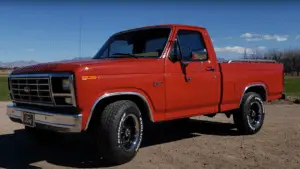
Bullnose Garage is a hands-on journey into classic Ford truck restoration. Follow along as I bring new life to my 1985 F-150 and 1982 Bronco, one wrench turn at a time.

I document everything on YouTube @BullnoseGarage. Check it out!
YouTube Play Button

Welcome to the Garage

Bullnose Garage is a hands-on journey into classic Ford truck restoration. Follow along as I bring new life to my 1985 F-150 and 1982 Bronco, one wrench turn at a time.

I document everything on YouTube @BullnoseGarage. Check it out!
YouTube Play Button

What is a Bullnose?

Bullnose Ford trucks ran from 1980 to 1986—square headlights, flat grille, no nonsense. They’re tough, timeless, and totally underappreciated.

Curious what makes a Bullnose a Bullnose?
Learn more about the 1980–86 F-Series.
What is a Bullnose - Classic Ford Truck Icon

Bullnose Systems

Bullnose Ford upgrades: engines, transmissions, suspension, steering, brakes, and custom mods.

Dive into the details on Bullnose mods, engines, and systems.
If it bolts on (or doesn’t), it’s probably here.
Bullnose Mods and Systems - Classic Ford Truck Icon

Need Help? Ask Bill!

Got questions about Bullnose trucks? Ask Bill, our resident AI mechanic. He’s got answers straight from the virtual garage.

Need help with your Bullnose truck?
Ask Bullnose Bill, our shop’s AI mechanic.
Ask Bullnose Bill - Bull Mascot Icon

Bullnose Trucks and Bronco Information

Build Progress Timeline

Follow the Bullnose Garage F-150 from teardown to track day. See every upgrade, modification, and milestone.

Check this out!

Support The Garage!
Support The Garage!

Like the builds? Want to see what happens behind the scenes? Join the crew on Patreon for early access, sneak peeks, more rants, and shop-floor chaos you won’t see on YouTube. Every little bit keeps the cameras rolling. Go to patreon.com/BullnoseGarage

Ask Bullnose Bill!
Ask Bullnose Bill!

Confused? Need help? Need information? If you have a Bullnose related question that isn't answered by the Bullnose Garage website or YouTube channel, then you can ask Bullnose Bill, our resident AI Bullnose Ford specialist! Humans are overrated anyway.

Bullnose Merch
Bullnose Merch

Looking to show your pride for your Bullnose Truck or Bronco? Check out the Bullnose Garage Merch Store! BNG has designs for both Broncos and F-Series trucks, specially made for enthusiasts like you. Get a shirt, mug, hat, or sticker and show off your project to the world!

The Garage's Latest Videos

Stuck Ford Head Bolts: Heat, Wax, and a Ruined Head
Show Transcript
If you saw my first video in this teardown series, you know I broke six bolts taking just the top end off this engine: two exhaust bolts, two water pump bolts, and two bolts when removing the intake. Howdy folks, Ed here. Welcome back to Bull’s Garage. After that happened I asked the internet for help and got lots of suggestions — everything from heat and heat cycles to using a torch, a welder, a hammer, candle wax, crayons, freezing, and more penetrating oil. Basically people told me to throw the entire periodic table at this engine. Some even said to throw the engine in a river and never speak of it again. We’re not doing that. Today I’m going back at it to try to get these bolts out using the information I gathered from your responses, and we’ll see what happens. These bolts will be out of this head; whether the head is usable again, we’ll see. Stick around. If you’ve torn down old crusty engines before, there’s a good chance you’ve snapped a bolt. Here’s the situation: the broken bolts are on the heads and the timing cover. None of those are parts I need for this build. I probably won’t keep the heads and I’ll toss the timing cover. I don’t have years of experience tearing down engines, so this is a perfect opportunity to learn how to remove difficult bolts on parts I don’t care about. Hopefully you can learn along with me, or laugh because you’ve done this a million times and know what I’m doing wrong. Of the six bolts, four are in cast iron — two still have a lot of thread and two are broken almost flush with the head. The other two up here are in aluminum; those are the two exhaust bolts. Here are the two water pump bolts. Here is the better of the two top intake bolts, and here is the really scary one. First I’ll try to do this without welding the front two. I’m almost certain I’ll need to weld the others, but I’ll try these without welding. I’ll grind a couple of flats on the bolts, get some heat on them, and use a good strong pair of vice grips with penetrating oil to wriggle them loose. Get the grips on as tight as my fingers can stand. Now I’m heating up the timing cover because it’s aluminum — aluminum expands faster than steel, so with heat I hope to rock the bolt free. Let’s see if we can wiggle it free. I’m getting some movement. It’s actual movement, not just shifting gasket material. All right, I’ll come around to get more leverage and hit it again.It stinks like hell, but it’s not hurting anything. It’s turning — it’s rough, but it’s turning. Part of the trick is to wiggle back and forth. If you just keep going the same direction, you’ll bind it up and risk snapping it. I think I’m going to be able to get this out. It’s starting to get squishy on me. That makes a big difference. It’s starting to cool off on me. That puppy was caught in there, but we got it. The trick is heating and cooling cycles and a lot of penetrating oil. There it goes. The interior threads on these are so messed up that at some point it’s not even unthreading. I’m just wiggling it straight out — I have to pull out and turn to get it to move. Checking my camera to make sure you can see this crusty son of a… Look at that thing. I could try the same thing over here. This bolt is already pretty well munged up, so I might try it because if I screw it up I can still weld a nut onto the end. Let’s give that a try. That helps suck the penetrating oil up into the grooves. We’ll get this on there and see if we can get it to move. Move for me. Come on. It feels like it might be. Nope. I’m just twisting the end; I don’t see any movement at the head. You know what? That just popped right off. That was worth the experiment. I still got plenty of meat here. So this exhaust bolt really refused to cooperate, and this is where things started going sideways. I didn’t get a good weld on there. What I’m trying to do is weld a nut onto the broken stud and back it out. In theory that gives me a fresh surface to grab, plus a bunch of heat right where I need it. In practice, not so much. I’m not getting a good weld. I’m pretty sure the steel stud is basically bonded to the cast iron head at this point, and cast iron is really good at pulling heat away. Instead of the weld puddle flowing down into the stud and really fusing, most of the heat is getting sucked down into the head. Hold on. That looks good. This is so janky. Oh my goodness. Am I just that bad of a welder? Maybe I am. The nut looks welded, but the stud itself isn’t actually becoming part of the weld. This is why I start using a torch to preheat the stud — hot enough to hopefully give me a little better fusion this time. I’ll be honest: I’m not an experienced welder. I didn’t want to crank the voltage and start blasting because I didn’t want to make things worse or damage the head even more. So I’m trying to walk that line between getting enough heat and not going full grill on it. Nope. This is frustrating. At this point in the video, this is before I asked the internet for advice. No wax, no crayons, no freeze spray, no exotic tricks yet. This is just me, a welder, a torch, penetrating oil, and a whole lot of stubbornness. And yeah, this bolt is not impressed.All right, guys. I’m going to have to come back to this one — I’m running out of camera time. One time a really good friend of mine said, “Ed, with all of your extensive experience tearing down engines, what is your absolute favorite part of doing an engine teardown on a 30-year-old crusty Ford engine?” And you know what I said? I said, “My friend, easily my favorite part of doing an engine teardown is all of the broken bolts.” I love that part. Yeah, everything I just said is completely not true. I don’t have any friends. Hello. All right, guys, round two with the bolts from hell. I’ve been waiting to do this for like three weeks. The very first thing I’m going to do is whack this a few times with a hammer to get some shock into it, and then I’m going to pull on it and see if it comes loose. This thing has been sitting here cold for about three weeks after I welded this nut on. I’ve added a little bit of penetrating fluid over that time on and off a few days, so it has had plenty of time to sit. We’re going to see if any of that made a difference. I’m just going to whack it with a hammer — that will be test number one. We’ll see if that did anything. Well, it rounded it so I couldn’t get the socket on. That’s what it did. There we go. Okay. I’m not feeling any movement here. There’s a little bit of sponginess right up there on the top, so I’m thinking that didn’t do it. The next thing I’m going to do is warm it up and throw some freeze-off on it and see if that takes care of it. For those yelling about the torch in my short, this is actually a MAP gas torch — MAP gas, not oxy-acetylene. The idea is to get it super hot and then hit it with freeze-off to thermal cycle it. There’s also penetrating fluid in the freeze-off. Now, a lot of folks said to try tightening it first and then loosening it, so I’m going to try that. I’m not getting anything on tightening — just a little sponginess. It’s entirely possible I’ve already sponged this bolt to the point where it’s not going to come out, but there’s no movement whatsoever. Well, that didn’t work on this particular bolt. Now, supposedly candle wax down inside the threads is supposed to get in here and…Lubricate. I’m not sure how much wax I’m supposed to use, but there’s certainly quite a bit down in there. You can see how much came off the candle. I don’t want to gunk it up too much. They didn’t say either way, so I’ll let that cool for a little bit. Maybe I’ll try it while it’s warm, then let it cool and try it again to test both ways. I’m trying to use patience here and work it back and forth. A lot of people said to be patient and work it back and forth as much as you can: tighten, then loosen, then tighten, then loosen. I’m not feeling any movement other than a little sponginess. You can see how quickly, even with the torch, cast iron pulls the heat out. It cools off really fast. The next thing I’ll try is a crayon, but this time I’ll heat the bolt instead of the heads so the crayon will wick down. I’m going with red—the color of despair and anger. It didn’t take very much; it melted pretty quick. I’ll let that cool and see what happens. In the meantime, I’ll get this one started so I can weld it on nice and tight. One thing I learned when welding this last time is to preheat with a torch before you start to weld, because cast iron pulls heat away from the stud so fast that it’s hard to get a solid weld. If you heat it first and then quickly hit it with the welder, it’s sort of preheated and gives better adhesion, or at least it seems that way. We’re nice and hot now. I’m leaving this with everything I’ve got. This one’s cooled off; the crayon should be down in there. We’ll give this one a try. The top is moving, but the bottom is not. I can actually see where the shear is happening. I think we’re going to break that one. In this case, the shear is well below where my weld is, so the weld is holding even if it’s ugly. Here’s what I’ll do: one more heat cycle on each of these, then hit them with candle wax again. Maybe the crayon down in here and the candle wax on top—if I heat them, the crayon will go down further. I really don’t know; I just want to give these every shot. If it wasn’t for trying to make this for YouTube and to teach myself, I would have broken these off a long time ago. I’m trying to find a good way to show how to get these out, something that works. All right, I’ll cool those down to try to get their strength back. They’re being warmed up; I’ll come back and wrench on them one last time. When I come back, they’ll either come out of the engine or they’ll snap, and we’ll see. Okay, here we go. See, it’s…Starting to shear right in here. These bolts may just not come out this way. There’s only so much patience I’m willing to expend on getting these out of here. Oh—looks like we might have some movement here, as a matter of fact. Okay, let’s not go too fast. We’ll bring it back just a little bit. Well, look at that, boys and girls. I’ll be damned. I was being so careful not to break it off that I didn’t want to put too much force into it, but that little bit of extra force is what got it out. Look at that thing. Just ignore my awful welding job. All right, well that one’s out. I might save that son of a bitch. The one I just took out I’ve only been fighting today. This one I’ve been fighting for weeks. So I’m going to do the same thing: just start twisting. Even though I feel like it’s going to break, I’m just going to keep going. Same deal—slow, even pressure—and we’re just going to keep moving. Even if it feels like it’s going to break, tighten and loosen back and forth a little bit. Oh yeah, that’s going to break. No question. Yep, right there. Like I said, I’ve been fighting this one for a week. I’m not sure there’s enough on there to weld a nut onto. I’m going to try to build up a little bit of weld on here and then do one more nut and see if I can get this out. See, it’s moving, but I don’t think it’s moving the stud. Nah, no—that was my weld that snapped off. So what that means is now it’s time to grind this flush, punch it, and drill it. Never done this before either. Wish me luck. Obviously you want to try to center this as much as possible. This is why machine shops get paid good money to do this kind of stuff. But if I paid a machine shop to do this, I wouldn’t learn anything. That’ll give me a nice spot to start my drilling. What I’ve got here is a relatively cheap reverse drill bit from Harbor Freight. I’m going to try to do the best job I can, go straight on as much as possible, start with a smaller bit first, and then walk my way up in sizes until I get to something that might actually extract this thing. Slow and steady is how I’m going to approach this. Well, that didn’t last very long, did it? I’d say that’s a pretty damning review of Harbor Freight’s reverse drill bits. It didn’t even last one second. I get what I get, I guess. I may have been pushing too hard. They are cutting pretty well, so maybe I was just pushing too hard. Where’s the bottom? Pretty close. Oh, okay. Yep, I’m down to the bottom. I’m not sure how big I can realistically go here without damaging. What happened there? Hopefully when I screw up, you won’t. I screwed up drilling out this bolt because I went too deep and now I’m in one of the water jackets. Let me show you what I mean: flashlight right down there into the water jacket hole. Here you can clearly see the light coming in through the hole that I just made in this head. So yes, this head is trash. Luckily it’s a truck head and it doesn’t really matter to me. I found this experience much more valuable as a lesson and actually the value ofWhatever this head is, I knew going in that I could screw something up like this. I’m still going to pull it off and go through how it works later, but I drilled too deep and busted right through into the water jacket. It’s close; there’s not a lot of give on the bottom of those exhaust bolt holes before you get into a cavity. That’s why I’m doing this—to learn. If I cared about the heads, I would take them to a machine shop. Instead I’m going to continue by getting the bolts out of the intake holes in the front of the engine that I also broke and see what I can do. Those are an opportunity to learn, not just a pain. My plan is to weld some buildup on top of each of these studs and try again with new nuts. We’ll use the freeze-off crayon wax just like before to see if they’ll move. These bolts go all the way through, so there’s an opening on the bottom of these heads. I can’t make the same mistake of drilling too deep; the only thing I can do is drill off-center and mess up the holes. These should be easier even if I end up drilling them out. One way or another, these bolts are coming out on camera today. Woohoo! My weld didn’t stick; there’s a lot of crud in there and I forgot how hot things are. It would get right there and then die. I had a little wiggle room and that’s it—I was worried about breaking or cutting them, but I got one out. It’s easy to drill. All right: six stuck bolts, six successfully removed, and only one head completely destroyed. I’m doing this to learn, because reading a book or watching a video doesn’t help me as much as doing it. I hope this helps you a little. If you want to save your heads, maybe you can avoid the same mistakes I made. These heads are coming off and going in the garbage; I’ll replace them with some aftermarket aluminum heads for my stroker build. The bottom line is we got all the bolts out, and I only made one truly horrible mistake out of six broken bolts, so that’s a win for my first time. I don’t know if the wax or crayons were what let me get the few out successfully, but that stuff didn’t hurt, and a box of crayons is cheap, so consider using them if you’re tackling an engine like this. I also learned that heat is important, as many of you told me. The next part is taking the heads off, which we’ll do in the next video. Stick around for the rest of the build series if you want to see that.Make sure that you subscribe — I’ll be doing this whole thing for the first time ever. I won’t be editing much out other than the boring parts, so if you want to see that, make sure you subscribe and you’ll see more of me screwing up. Thanks again for watching. If you have any questions, comments, concerns, or internet ramblings, put them below and we will see you next time. If you want to dig deeper into the builds, the side projects, and the stuff that doesn’t always make it on YouTube, or just want to get to know me better, come hang out on patreon.com/bullnose Garage. It helps keep the lights on — beer-fueled. I appreciate you guys being part of the garage. Around the edges she’s doing fine. Take her head away. Getting things to shine at Moon’s garage; she’s considered divine. Thanks again for watching. We will see you next time.

If you’ve ever thought, “How hard can stuck bolts be?” this one’s for you. I went after a set of seized exhaust and intake bolts on an old Ford head, armed with heat, penetrant, candles, crayons, freeze-off, a welder, and a dangerous level of optimism. It wasn’t pretty. Some bolts gave up with patience. One fought me until I drilled it straight into the water jacket and turned the head into scrap. Real life, not the highlight reel.

This is my first full engine teardown, and I’m using parts I don’t plan to reuse as a training ground. The goal: show what actually works, what only works on the internet, and where the line is between “DIY” and “yeah, this needs a machine shop.”

Recap: Six Broken Bolts and a Plan

At the end of the first teardown session, I’d managed to snap six bolts just getting the top end apart: two exhaust bolts, two water pump bolts, and two intake bolts. Four of them were in cast iron (two with decent threads left, two nearly flush with the surface), and two were in aluminum.

None of the affected parts are destined for this build. I’m not reusing the heads, and the timing cover’s going in the scrap pile. That takes the pressure off and makes this the perfect place to learn—and to show you exactly where things go wrong. If you’ve done it a hundred times, enjoy the schadenfreude. If you haven’t, maybe this will save you a headache or three.

First Attempts: No Welder, Just Heat and Leverage

I started with the less risky stuff. On the aluminum timing cover, I ground flats into the broken stubs, hit the cover with heat (aluminum expands faster than steel), and clamped down hard with locking pliers. The key was slow, controlled, back-and-forth movement with lots of penetrant, not just cranking in one direction. It smelled like victory…and burning crud…but it worked. The bolt came out ugly, but it came out.

That set the tone: heat, patience, and “tighter then looser” cycles to avoid binding. You don’t just twist; you wriggle the bolt out and help the penetrant wick in.

Exhaust Studs vs. Cast Iron: The Welding Game

Then I met the exhaust studs in the cast iron head. The common advice is to weld a nut to the stud. In theory, you get a solid hex to grab and the heat from welding helps break the bond. In practice on a cold chunk of cast iron, the head acts like a heat sink and steals the energy you want in the stud. My welds looked attached, but the fusion into the stud wasn’t there.

I tried preheating with a torch to keep more heat in the stud and less in the head. For the record, the torch here is MAP gas, not oxy-acetylene. I dialed in as much heat as I dared without going full barbecue on the casting. Still janky. The nut would look welded, but the stud itself wasn’t truly part of the puddle. Frustration levels: rising.

Round Two: Shock, Freeze-Off, and the Internet’s Bag of Tricks

After stepping away for a few weeks (and after asking the internet for help), I came back with a list: hammer shock, heat cycles, freeze-off, tighten-then-loosen, candle wax, and crayons. Yes, crayons.

Shock and Preload

I started by smacking the welded nut to shock the threads, then put moderate torque on it. No joy—just sponginess. The stud felt like it was twisting without turning the threads.

Heat and Freeze-Off

I heated the area, then hit it with freeze-off to try and thermal-cycle the joint. Some cans have penetrant mixed in, which doesn’t hurt. Still no movement worth celebrating.

Candle Wax and Crayons

Next: candle wax. The idea is to heat the fastener and let wax wick into the threads. I fed in a good amount, then tried again hot and again cold. Still spongy. After that, the crayon experiment… red, obviously, the color of despair and anger… melted into a preheated stud to flow down into the threads. More preheat before welding (lesson learned: cast iron steals heat like it’s its job), then another go.

The Breakthrough…and the Break

Finally, one of the exhaust studs started to move. The trick, in this specific case, was pushing just a little harder while still working it back and forth. Not reckless force, just a little more than I was comfortable with. Out it came, ugly weld and all.

The other one? It snapped. The shear was below the weld, which confirmed the weld had finally bonded, but it didn’t matter… the stud itself failed. Time for the last resort.

Drilling: Center, Commit, and Don’t Go Too Deep

With the stud broken flush, I ground it flat, center-punched it, and reached for reverse drill bits. The cheap set I had didn’t survive long. One bit died almost immediately. I might have pushed too hard, but either way, quality matters when the stakes are high.

I stepped up sizes carefully and made sure I was going straight. Then I made the one mistake you can’t patch with optimism: I went too deep and broke through into the water jacket. Flashlight through the hole confirmed it… this head is done. On many cast iron heads, the exhaust bolt holes don’t leave you much meat before you hit a cavity. If you care about the head, this is where you stop and pay a machine shop. Ask me how I know.

On to the Intake Bolts

After the exhaust fiasco, I moved to the broken intake bolts. Those go through into the open, so depth wasn’t going to kill anything… only drilling off-center would. I reused the same escalation: welding buildup, nuts, heat, freeze-off, wax/crayon, patience. One weld didn’t stick thanks to crud, but I got movement where I needed it. Worst case, they’re easy to drill compared to blind holes.

By the end, all six stuck bolts were out. One head was officially scrap thanks to the water jacket hole, but every broken fastener was freed.

What Worked, What Didn’t, and Why

Heat Cycles Matter

Heat the surrounding material, let it expand, work the bolt. Cool it down, hit it with penetrant or freeze-off to pull fluids into the joint. Repeat. Cast iron drops heat fast, so plan on multiple cycles.

Back-and-Forth Wins

Don’t just crank in one direction. Load the bolt, then reverse. Tighten slightly before loosening. That shock breaks rust crystal bonds and prevents galling that turns a stuck bolt into a snapped bolt.

Welding a Nut: Preheat Is Key

On cast iron, preheat the stud and area before you strike an arc. Otherwise, the head soaks up your weld heat and the puddle won’t fuse to the stud. Even with preheat, you’re not guaranteed success… especially if the stud is corroded to the point of torsional failure.

Wax and Crayons

Do they work? Hard to say definitively. They didn’t hurt. Candle wax and crayons will wick into hot threads and add lubrication. A box of crayons is cheap, and in this case I used both. They may have helped on the wins and definitely didn’t cause the losses.

Aluminum vs. Cast Iron

Heating aluminum parts (like the timing cover) gives you more expansion per degree, which can free a steel fastener. Cast iron won’t expand as much and steals heat fast, making welding and heat transfer tougher. Respect the difference.

Know When to Stop

If the head matters, consider a machine shop the moment you’re staring at a broken stud below the surface in cast iron. They have fixtures, EDM, and the right cutters to do this without turning your water jacket into a fountain.

Tool Quality Isn’t Optional

Reverse drill bits are great… when they don’t explode on contact. Cheap bits can get you into more trouble. Slow speed, cutting fluid, straight alignment, and patience are the rules. Step up sizes gradually and stop frequently to check depth.

Lessons I’m Taking Forward

  • Prep the surface and center-punch like your head depends on it—because it does.
  • Start with heat cycles, penetrant, and back-and-forth torque. Escalate slowly.
  • Preheat cast iron before welding a nut to a stud; it improves your chances of fusion.
  • If a stud feels spongy, it may already be necking down. Respect that feedback.
  • On blind holes in cast iron, depth is a hard limit. Stop early and verify.
  • Crayons and candle wax are cheap experiments. They might be the 5% you need.
  • When in doubt, and when the part matters, machine shop.

Where This Leaves the Build

Final scorecard: six stuck bolts removed, one head sacrificed to the water jacket gods. These heads are coming off and going in the trash anyway. I’m planning aftermarket aluminum heads for the stroker build. Next up is pulling the heads and moving further into the teardown.

Why Show the Ugly Parts?

This isn’t a “perfect outcome” video because that’s not how this work goes in the real world. You can do everything “right” and still end up with a snapped stud or a trashed casting if you push one step too far. The point is to show what removal actually looks like: the feels, the decision points, and the mistakes to avoid.

Watch, Comment, and Tell Me I’m Wrong

Want to see exactly how each step played out… welds, heat cycles, freeze-off plume, wax, crayons, the sad flashlight-through-the-water-jacket moment? It’s all in the video. Check it out above, drop your tips and war stories in the comments, and subscribe if you want to ride along for the rest of this teardown. If you want more behind-the-scenes and side projects, I’m over on Patreon too.

Thanks for hanging out in the garage. See you on the next one.


Bullnose Garage at YouTube

If you want more specific information on Bullnose Ford Trucks, check out my YouTube Channel!

For more information on Bullnose Fords, you can check out the BullnoseFord SubReddit or Gary’s Garagemahal. Both are excellent resources.

As an Amazon Associate, I earn from qualifying purchases. If you see an Amazon link on my site, purchasing the item from Amazon using that link helps out the Channel.
351 Windsor Top-End Teardown: 30 Years of Wear Revealed
Show Transcript
I’m about to tear into this 30-year-old Ford 351 Windsor and I’m going to bring you along to see what’s lurking inside. I have to get something out of the way up front: I’ve never torn down an engine before. Not once. So if you’re here looking for decades of engine-building wisdom, this might be the most educational disaster you’ve ever witnessed. That’s what I was afraid of, and that is why exhaust bolts are scary. Holy — I busted my socket wrench. If you’re here to watch a regular guy crack open an old Windsor engine for the first time, you’re in the right garage. Howdy folks, Ed here. Welcome back to Bullnose Garage. I’m not just tearing this engine down and building it back up; I’m learning as I go. I’ve done a lot of research, so I basically know the order to do things in, what to look for, what to keep, what to toss, what matters and what doesn’t. If you’ve never done this before, come along and hopefully you’ll learn something. If you’ve done a couple of engines, come along anyway because you might learn something too — and if not, you’ll get to laugh at me or cry with me. Either way, you’ll be entertained. This engine will be stripped to a bare block, taken to a machine shop, machined for a 408 stroker build, and I’ll show you how that works. Then I’ll source the parts, build it into a 408 stroker, start it on the stand, drop it into my ’85 F-150, and hopefully take it to the track. I’ve been talking about this engine and putting it off for a long time. As an old ex-girlfriend used to say, don’t talk about it — be about it. So let’s get to work. First I’m going to make labels and baggies to make sure I know where everything goes. I probably won’t reuse these, but it’s good to have things labeled just in case. If you’re doing a rebuild and you’re not adding a bunch of new performance parts, definitely label and put away all the parts even if you only have a few. I only have a couple of these rear head bolts, but now I know where they go. Okay, the bolts are off. I’m going to start taking off some of the little brackets and parts that bend to get off. There we go. Motor mounts off. There’s the motor mount—pretty crusty. I’ll almost certainly replace the mount, but I’ll keep thePlate. Now, for my application, which is putting this in a truck that has an inline six, the motor perches do not fit. So I saved the perches from the mounting of this engine from the ’96 F-150 so that I can attach them to my ’85. Hey—dead bugs. Bonus. While I’m over here trying to convince these exhaust bolts to leave the premises, let’s talk about why these things are always such a nightmare. Ford didn’t do anything wrong here; this is just what cast iron manifolds do after 30 years of heat cycles. You have steel bolts threaded into cast iron. The manifold acts like a giant heat sink, and every time this engine warmed up and cooled down, the threads basically just shook hands a little bit tighter. Add in some surface rust, a couple decades of New Mexico dust bacon on there, and these bolts get real sentimental about staying home. The funny part is how they sound when you’re breaking them loose. The first few on this side creaked and groaned like an old door hinge on a haunted house. That’s actually good; it means they’re moving. They’re not happy about it, but they’re still participating in the conversation. What you don’t want is that quiet turn where the head spins without a single complaint. That’s when the bolt stops acting like a bolt and starts feeling just a little bit spongy. That’s the moment you pause and think, “No, this is going to turn into a whole thing, isn’t it?” If you’ve wrenched long enough, you know that silence is the sound of a storm rolling in. All I can really do is hit those things with some penetrating oil, maybe add some heat from a MAP torch. The cast iron soaks that heat away fast, so it only really makes a difference sometimes. Use a lot of slow, steady pressure, patience, and hope for the best. When that fails, you’ll see. Exhaust manifold bolts make me nervous because they’re pretty easy to break. If you break one, you’re pretty much teaching yourself how to weld. I’m going to spray those, let them sit for a little bit, and come back to this side. There we go. And there’s removal of the oil dipstick. It’s just a little bung that presses in. On the passenger side, I stopped short on two of those bolts. I could feel that sponginess starting, and that’s usually my cue to back off and let them soak a little longer. Sometimes walking away is the smartest move you can make. Luckily, I didn’t have the same fight on the driver’s side; those bolts all came out clean with no drama. If you do break a bolt, you’ve got a few options, and what you do depends on the material and how much bolt is still sticking out. If you’ve got a decent amount of thread showing, you can sometimes get away with vice grips or grind a couple flats and put a wrench on it. That works sometimes, but if the head’s already snapped off, chances are the rest of the bolt is still locked in there pretty good. People suggest grinding a slot and trying to back it out with a flathead screwdriver. That can work, but on bolts this stuck, it’s usually wishful thinking. Honestly, the best move is welding a nut onto what’s left. That gives you something solid to wrench on, and the heat from the welding helps break the bond when the threads are seized. A lot of times, the heat cycle helps break the bond.Itself is what actually does the work. If that doesn’t work, you’re down to cutting it flush and drilling it out. That’s not fun or fast, but it is doable with patience, sharp bits, and a steady hand. It’s one of those jobs nobody wants during engine work, but everybody eventually gets. That is why exhaust bolts are scary. I ended up with a crusty old exhaust manifold and a couple of busted-off exhaust bolts. It happens with older engines. Luckily there’s quite a bit of thread left, so there are different ways to get those out. I’ll hit them with penetrating oil, let it soak, and then probably weld a couple of nuts on to get enough bite to back them out. If they break right up against the block, that would be much worse. Since I’m not inside a vehicle, it’s easier. Welding a nut on the end is the way to go. One crusty old thermostat housing. And the water pump is crusty too. I busted my socket wrench — Harbor Freight. I don’t trust it; I might break another one. I tried heat with a butane torch, but it didn’t seem to move the bolts the way it should. At least one bolt snapped off right inside. To get the water pump off I counted seven bolts; one is broken. I tapped progressively with a hammer to loosen it, then gently pried from the back to remove the pump. I’m wrapping up for the night.I busted these two bolts right here for my research. That’s pretty common. These go into the timing cover. This gets corroded and is hard to get out. Once I get my MAP torch ready to go, I’ll warm those up and try to get them out. Same thing over here on the exhaust side. The other side came off clean. This one I snapped two bolts. I’ll get these cleaned up, get a nut welded on, and try to get that back off, but I’m not doing that tonight. To show you what I took off, here are the exhaust manifolds. They’re actually in pretty good shape: big and heavy and a little crusty, but there are no cracks and they do not appear to be warped, so they should be salvageable once cleaned up. They’re not worth a whole lot, but they will be worth something to somebody trying to rebuild a period engine out in Old Windsor. As I said during the first part of the video, these are the engine mounts. I’ll keep the mount parts and just replace the pads. The pads aren’t super expensive; I’ll clean these mounts up and keep them. The thermostat housing and thermostat are basically trash—not really worth saving. Here’s the old crusty water pump. Generally when you do a rebuild you’re going to end up replacing this; water pumps aren’t super expensive. This one’s actually in pretty good shape. You can see back here there’s not a lot of corrosion. There are a couple of rough spots and the water passages are crusty, but nothing major that indicates any real problems with this engine so far. When I took this off I was careful so I didn’t break it, but realistically it’s not worth that much—probably about a hundred dollars brand new. This is a coolant temperature sensor; again, not really worth saving, so that’ll go in the garbage pile. I have a box back here I’m going to start filling with all this stuff. That is the entirety of day one. I spent most of it wrestling those parts off. This evening we’re going to start working on getting the pulley and the harmonic balancer off. If I have time, I may start with the valve covers and the intake, because I can access that stuff without worrying about those bolts, which I’ll deal with once I get my torch. Did that work? Hey, it did. All right. Now, before I could get the crank bolt loose, I had to stop the rotating assembly from rotating. With the engine on a stand, everything wants to spin together, so you need something solid to brace it against. That’s why I bolted the flex plate back on. I don’t need it permanently; I just need a way to lock the crank in place. It took me a minute to find the right tool, but in the end a thick punch through one of the flex plate holes did the trick. Simple, solid, and it let me put real torque on the crank nut without the whole engine turning into a merry-go-round. Heat, heat. There you go. I folded out. While we’re here, quick confession: my first attempt at pulling the harmonic balancer was a no-go. Turns out I…Completely forgot the washer that sits behind the crankbolt. The balancer wasn’t going to go anywhere because it literally couldn’t. It’s an easy mistake to make, especially when you’re in teardown mode and moving pretty quickly, but it’s definitely one of those stop-and-recheck moments. The balancer puller was starting to flex a little as I was cranking on it, so I stopped, stepped back, and re-evaluated. Once that washer was out, things went a whole lot more like they were supposed to. Easy peasy. That sorted the harmonic balancer.I have impact wrenches, but I don’t use them very much. I prefer the ratchet; I like being able to feel it, especially the first time I do a job. Once I get more used to how things should feel, I might start using power tools more, but to start, I really enjoy using my hand ratchets.These valve covers are in really good shape. I’m not going to save them for my build because I want more custom covers, but they might be worth something to somebody. From everything I can see, this looks like an almost perfect 408 rebuild candidate. So far I have not seen anything that gives me pause. You can see varnish inside, which is typical, but it’s nice and uniform. Nothing looks bent or out of true, and there’s no discoloration that would cause alarm. There’s a little crud, but it’s an old high-mileage Ford truck engine, so that’s expected.This is the moment to stop and take a look before pulling anything else apart. To be honest, this is about as boring as it gets, which is great news. Both banks look consistent: same oil film, same coloration, same rocker height. When something’s wrong up top, it almost never hides itself evenly; one cylinder will usually give itself away. You might spot a rocker discolored or blued from heat, which suggests friction or oil starvation, uneven wear on the rocker tip, a pushrod leaning to one side instead of centered on a valve stem, hinting at geometry issues, or even a bent pushrod.Valve springs are another big tell. A broken spring is obvious, but a weak or collapsed spring is sneakier. One spring sitting lower than the rest or a retainer that doesn’t line up with its neighbors is a red flag. The same goes for keepers that don’t look seated evenly; that’s a failure waiting to happen.I’m also watching for oiling clues. Everything here has the normal thin oil coating. If rockers or springs looked dry or heat-stained compared to the rest, I’d suspect oiling problems, but there’s none of that here. In fact, some of these rockers still had little drops of oil from years of sitting in my backyard. Finally, it’s about symmetry. Valve trains should look boringly uniform, just like this.The second cylinder looks different. Different color, different height, different wear. That’s where you stop and wonder what happened to this engine. In this case, nothing stands out: no broken springs, no discoloration, no weird wear patterns. That doesn’t mean the engine is perfect; it just means nothing up top is waving a red flag yet, and that’s exactly what you want before you keep tearing it down. Which is why I sounded so chuffed after I pulled the second cover off. Broken bolts aside, things are going really well for this build so far.Now let’s see if we can get the intake off. Hopefully the intake bolts aren’t completely seized. I started turning one, but I couldn’t tell if it was coming loose. Did I snap it? I didn’t feel it, but I did snap it right off, right onto the head.This is the point where the engine politely suggests a change in strategy. The first intake bolt started to feel spongy and the second one snapped. That was my cue that I was no longer negotiating—I was losing. When bolts start doing that, more force isn’t bravery, it’s false optimism. What you’re actually fighting is corrosion between steel bolts and a cast-iron intake that’s been heat cycling since I was in high school, and cast iron does not respond well to threats. So instead of leaning harder on the wrench, I brought up the torch.The trick isn’t to heat the bolt; it’s to heat the intake around the bolt. You’re trying to make the hole grow, not the problem. Once it’s hot, you let penetrating oil wick into the threads and do what it does best, down where it matters. Does this guarantee success? No. But it turns a coin flip into better odds. After the first bolt went spongy and the second snapped on the intake manifold, I’ll take every advantage I can get.This is what it looks like when you listen to the warning signs instead of arguing with them. After heating the intake and letting the penetrating oil wick in, the bolts actually start coming out the way they’re supposed to: slow, noisy, dramatic—but moving. You can feel the difference immediately. Instead of that spongy, soul-crushing flex, you get resistance, a little creak, and then progress.Clearly heat made a big difference. I did the first one cold and it just snapped like a twig. Look at the gunk coming out of that shaft. At the very least, the rest of the bolts on this side are coming out clean so far. I’m not looking forward to getting that snapped bolt out of the head, but we’ll figure it out. I may have to redo that one.That just popped right off. None of the bolts I heated snapped—not one. Same engine, same tools, same patience, just better physics. It’s not fast, but this is one of those moments where slowing down saves you hours later. Sometimes the win isn’t muscling through; it’s changing tactics before the engine makes that decision for you. Look at all the crap coming out of there. Now that one’s not rough—good stuff.And then there’s this bolt, the one that didn’t get the memo. I went back to it and did everything right: heat it, let it cool, let the penetrating oil wick in, apply gentle pressure, and tap it with a hammer.Heat it again, more oil, more patience, over and over. This was full-on ritual mode, just hoping and praying it would finally decide to cooperate. But here’s the thing: I think the damage was already done. That bolt was my very first attempt before heat ever entered the conversation. Once a bolt starts to twist internally, even just a little bit, you’ve already weakened it. After that, all the heat and patience in the world can’t put the strength back. So eventually physics wins. The bolt doesn’t come out. It gives up and it snaps. That’s the real lesson here. Heat works, technique matters, but timing matters just as much. If you feel that spongy warning early, stop immediately, because once a bolt starts stretching, you’re not removing it anymore — you’re just deciding when it’s going to break. Yep. I’m definitely just going to bust it. Son of a little bastard. Oh yeah, that’s crusty.All right, guys. There’s the underside of the intake. Take a look at this. There is our lifter valley. There’s a little bit of crud in here, but that’ll all get cleaned out. At first glance to my inexperienced eye, it looks pretty good. The only real issue is that I’ve got a bolt down inside the head that’s snapped off, and one that’s sitting a little proud. I need to figure out how to take care of those guys, but the interior looks pretty good.Last night I got the take-off and exposed the lifter valley. It looks pretty good; I’ll give you some B-roll of that here. I tapped off two bolts right here in the front while doing it, so we’ll have to figure out how to get those out later. Right now I’m going to worry about getting these rockers off and the rods out and just checking to make sure that they’re all straight. That will pretty much wrap up the top end of this teardown.By the way, I’ve got several bags made up and labeled with the cylinder numbers on them so I can keep the entire set together: cylinder 1, cylinder 2, cylinder 3, and so on — the rockers, pushrods, and lifters. That way if I want to come back and do some forensics later, I can. It’s not super important to me because I’m going to be rebuilding this into a 408 and none of this stuff is going back in this engine, but if you’re doing a refresh or a straight stock rebuild and you want to reuse some of this stuff, you have to make sure you put them back in the right places. I’m doing it just for forensics, to have a history of what this engine was doing before. Your situation may vary, but it’s always a good idea to label some baggies and keep things together.This is the first one. We’ll go through some more, but just to give you a quick look for those who know what they’re looking for: that’s the lifter side, and there’s the rocker side. Here’s the rocker itself — looks pretty good, rolls nice and straight. There we go. Spider’s out. Now we can pull the dog bone. Nice. And now we can pull the lifter. Nice. Look at that guy. I’m not an expert, but that looks like it’s in really good shape.And now for the inevitable call to action: if you’re enjoying the video, hit like, subscribe, or better yet, check out patreon.com/bullnosegar. You’ll see some neat behind-the-scenes stuff and even more.That’s definitely why you’re here, right? It looks really good. I don’t see anything too concerning—just a little varnish that rubs off with my thumb. Overall, it’s looking really good. What I’m looking for is any discoloration or shape change, especially on the ends—mushrooming or anything like that—and I’m not seeing any of that. Most of these lifters came out looking great: smooth, mirror-like rollers with no visible damage. That’s exactly what you hope to see. A handful had light surface marks on the rollers, but nothing I could feel with a fingernail. Light surface marks are unusual on a used engine, and by themselves they don’t automatically mean the lifter is bad. What matters is whether the wear is purely visual or something you can actually feel. That distinction is huge. On a roller-cam engine, once the hardened surface of the roller is compromised, that lifter isn’t just worn—it’s a liability. Instead of rolling cleanly on the cam lobe, it can start to slide microscopically, and that’s how you eventually wipe out a cam. That kind of damage isn’t just cosmetic and it won’t improve with reuse. In a budget rebuild, lifters can be reused even with light visible wear, as long as they go back in the exact same locations on the same cam. But the moment you can feel wear with your fingernail, that reuse window slams shut. At that point you’re risking the cam, not just the lifter. And to be clear: if you’re changing cams, you change lifters—always. These reuse guidelines only apply when the cam stays exactly the same and the lifters return to their original locations. Flat-tappet cams are even less forgiving. A mismatched roller lifter might cause problems; a mismatched flat-tappet lifter will cause problems. Any visible or measurable wear is usually a deal breaker. Different designs, different tolerances, but the same inspection mindset applies every time. Number three exhaust—I can just barely catch my nail on it, the number three exhaust lifter. You can see a little line there; I can just barely feel it with my nail. This is pretty much normal wear for a Windsor with high mileage, about 30 years old. Compared to the other lifters, this one looks rough because the others are nearly pristine, but it would still be serviceable in an engine running on the road. I wouldn’t put this back into an engine if I were rebuilding it, though. There’s nothing catastrophic going on here. This is the worst one I’ve seen so far. I have one cylinder left—two lifters—and that’s the worst I’ve seen. To be completely clear, when I say “serviceable,” I mean that if this lifter was already running in that engine, a fingernail scratch doesn’t mean it’s going to wipe out the cam tomorrow. But I would never reuse it in a rebuild. Once you can feel wear like that, it’s crossed the line for reuse. In my case, I’m changing the cam anyway, so all these lifters are shelf sitters or knickknacks. Maybe I’ll give a couple to the kiddos for Christmas. Oh, this one looks mirror-finish. Overall, this engine looks fantastic. I couldn’t ask for a better rebuild candidate, a better four-weight stroker candidate than what I have.So far, there are no indications that this engine was ever abused. No signs it was run dry, at high RPM, overheated, or anything like that. The darkening looks like aged oil that’s coated all the surfaces correctly — basically what you get from a 30-year-old engine patina. It looks exactly like what you would want for something like this. The big problem is these bolts that all snapped off. I got a total of six: two here on the front water pump and the timing cover, two at the top of each head, and two on the passenger-side head where the exhaust manifold was. I could just take all this stuff off and toss it. These are just regular truck heads, not anything special. I might get a couple hundred bucks for them, maybe. The timing cover is pretty cheap, basically disposable. I could just pull it and toss it and not worry about getting these bolts out. But because I’m doing content for YouTube and I want to learn — and I just taught myself how to weld — this is a perfect opportunity to see if I can get these out. If I destroy the heads or the timing cover, oh well. What I care about is the block, so this lets me learn on hardware I ultimately don’t really care about. They’re completely different situations: these two are cut off real close with almost no meat, there’s a lot of material on the exhaust-side bolts, and a ton of meat up here. But up here these are going into an aluminum timing cover, so the metals are dissimilar. Here they were going through an aluminum intake, but now they’re going through a cast-iron head, which is a different situation. I can use that to teach myself how to unstick bolts from different metals using different methods — heat, welding, putting nuts on, penetrating oil, and so on. We’ll explore that in a different video. Once that’s done, we’ll flip her over, pull everything off the bottom end, and take a look at the crank, camshaft, oil pan, bearings, and see what kind of wear patterns we’ve got down there. If you want to see what comes next, make sure you like and subscribe. Thanks again for watching. If you have any questions, comments, concerns, gripes, or inner ramblings, stick them below and we will see you next time. If you want to dig deeper into the builds, the side projects, and the stuff that doesn’t always make it on YouTube, or just want to get to know me a little better, come hang out on patreon.com/bullnosegar. It helps keep the lights on, the beer fridge full, and the builds funded. Appreciate you being part of the garage. Thanks again for watching — we’ll see you next time.

Ever wondered what three decades inside a Ford 351 Windsor actually looks like? I cracked open the top end of a 30-year-old 351W and brought the camera along for my first-ever engine teardown. No hero edits, no expert ego… just a regular guy, a pile of baggies, and a growing list of broken bolts.

It’s Part One of a full Windsor teardown series, and the goal is simple: figure out whether this engine deserves a second life as a 408 stroker for my 1985 F-150. Spoiler: despite the bolt carnage, it’s looking good.

The Plan: Strip the Windsor for a 408 Stroker

This engine is getting torn down to a bare block, sent to the machine shop, and built back up as a 408 stroker. Before any of that, I’m staying organized. Labels and baggies for everything, even though I’m not reusing most of these parts. If you’re doing a stock refresh and plan to reuse parts, labeling is non-negotiable. Even for a performance build, it’s handy for forensics later.

Quick side note on mounts: this Windsor is going into a truck that originally had an inline-six, so the perches don’t match. I saved the perches from the donor ’96 F-150 to help with the swap into my ’85.

Exhaust Manifolds: Why Old Bolts Snap

Exhaust manifold bolts are the stuff of nightmares, and this engine reminded me why. Steel bolts in cast iron, 30 years of heat cycles, a dusting of rust… those threads basically married themselves. The driver’s side cooperated. The passenger side? Not so friendly. I stopped on a couple when they got “spongy,” then later ended up with a couple busted-off bolts anyway. Par for the course.

The sounds tell the story. Creaking and groaning means the bolt is mad but moving. Silence with a mushy feel is when you stop and reconsider life choices. That’s when you switch from force to finesse: heat, patience, and penetrating oil.

When Bolts Snap: Realistic Options

  • Penetrating oil and heat: Warm the area, let capillary action pull oil into the threads, then try again with slow pressure.
  • Vice grips or wrench on flats: Works only if enough bolt is sticking out and it isn’t fused solid.
  • Cut a slot for a flathead: Possible, but often wishful thinking with bolts this stuck.
  • Weld a nut to the stud: Best option if there’s a nub to grab. The heat from welding helps break the bond.
  • Drill it out: The last resort. Slow, straight, and sharp bits are your friends.

I’ve got enough thread left on a couple to try welding nuts on. If they were snapped flush, I’d be in for a longer day. Fortunately, this is on a stand, not in a fender well, so access is on my side.

Water Pump and Timing Cover Drama

The thermostat housing and water pump were crusty, no surprise there. I even managed to bust a socket wrench during the process. A butane torch didn’t persuade the water pump bolts, and at least one bolt snapped off inside. In the end, I counted seven bolts on the pump and one broken. Some careful tapping and gentle prying got the pump off.

For the record: snapping bolts in the timing cover is pretty common. The plan is to come back with a MAP torch, warm them up, and try the welded-nut trick. The timing cover itself isn’t precious, but this is a good chance to practice extraction on dissimilar metals without risking the block.

As for the parts pile: the thermostat housing and sensor are trash. The water pump is in better cosmetic shape than you’d expect, light corrosion, nothing alarming, but it’s a routine replacement on a rebuild anyway. The exhaust manifolds look solid, no cracks and no obvious warp, just heavy and crusty. Worth saving for someone doing a period-correct build.

Locking the Crank and Pulling the Harmonic Balancer

With the engine on a stand, everything wants to spin while you try to loosen the crank bolt. The fix: bolt the flex plate back on and run a stout punch through a flex-plate hole to lock it against the stand. Simple and effective.

Pro tip learned the loud way: don’t forget the washer behind the crank bolt when pulling the harmonic balancer. I did. The puller started flexing, I stopped, rechecked, pulled the washer, and then it came off like it should. Easy once you’re not trying to bend physics around a stuck washer.

Valve Covers Off: Boring Is Good

I prefer ratchets over impacts on a first-time job. Feeling what the fastener is doing tells you a lot and can save parts (and your sanity). Under the valve covers, things looked exactly how you want on a veteran Windsor: boringly consistent. Uniform varnish, nothing discolored, no rocker that looked out of place, no obvious geometry issues, and the oil film looked even across both banks.

If something were wrong, you’d usually see it telegraph up top… blued rockers from heat, a retainer sitting low, keepers not fully seated, a pushrod leaning instead of centered. None of that here. Both banks matched in color and height, which is the best possible “nothing to see here” you can get.

Intake Manifold: When Force Fails, Use Physics

The intake manifold tried to teach me a lesson. The first bolt turned spongy. The next one snapped. That’s the moment you admit you’re not persuading the bolt anymore… you’re stretching it. So I changed tactics: heat the intake around the bolt (not the bolt itself), let penetrating oil wick in, and work each fastener slowly.

That change made all the difference. The heated bolts came out noisy and cranky, but they came out. The one I tried earlier, before heat, was already weakened and eventually snapped. Timing matters as much as technique. If a bolt feels gummy, stop early. Once it starts to twist internally, no amount of patience will put the strength back.

With the intake off, the lifter valley looked honest: a little crud, nothing catastrophic. I’ve got one bolt snapped off in a head and another sitting a little proud, and I’ll tackle those later. For a high-mileage truck engine, this all looks about right.

Lifters, Rockers, and Pushrods: What “Good” Wear Looks Like

I bagged and labeled rockers, pushrods, and lifters by cylinder. I’m not planning to reuse them… I’m changing the cam for the stroker… but keeping the sets together is useful if you want to do any post-mortem or reuse on a refresh.

The dog bones and spider came out cleanly, and the roller lifters mostly looked excellent: smooth, mirror-like rollers with no damage you could feel. A few had light surface marks, the kind you can’t catch with a fingernail. On a roller-cam engine, that kind of purely visual wear can be acceptable for reuse, but only if the cam stays and each lifter goes back to its exact original bore.

One lifter, the number three exhaust, had a faint line I could just barely catch with a fingernail. That’s the line between “serviceable in-place” and “do not reuse in a rebuild.” You might drive with it as-is if it’s already paired to that cam and you’re not changing anything, but for a rebuild, especially with a new cam, it’s a hard no. Once you can feel wear, the hardened surface is compromised and it can start sliding instead of rolling. That leads to wiped lobes and tears.

For clarity:

  • Reusing roller lifters can be fine only if they go back in the same bores on the same cam and you can’t feel wear with a fingernail.
  • If you’re changing cams, you change lifters. Always.
  • Flat-tappet engines are even less forgiving; mismatching is basically a failure plan.

Big picture: the valvetrain looks healthy. This Windsor’s top end doesn’t show signs of abuse, oil starvation, or overheating. Just an even patina of old oil and symmetry everywhere. That’s exactly what you want to see before you commit to machine work.

Current Damage Report and Next Steps

Here’s the tally on the snap-a-thon so far:

  • Two bolts at the water pump/timing cover area
  • Two at the top of the heads (intake bolt casualties)
  • Two exhaust manifold bolts on the passenger side

I could toss the timing cover and even the truck heads and move on. They’re not rare parts. But I want to learn and show the process, so I’m going to try multiple extraction methods: heating, welding nuts, and using penetrating oil on both cast iron and aluminum interfaces to highlight the differences. If I wreck a timing cover, I won’t lose sleep. The block is what matters.

From here, I’ll cover bolt extraction in a separate video, then flip the engine, pull the bottom end, and inspect the crank, camshaft, bearings, and oiling situation. After that, it’s off to the machine shop for 408 stroker prep, parts selection, assembly, a run on the stand, and finally into the ’85 F-150. If everything behaves, we’ll take it to the track.

Series Roadmap

  • Top-end teardown (this one)
  • Bolt Extraction
  • Head removal and review
  • Bottom-end inspection
  • Machine shop prep
  • 408 stroker build
  • Engine startup and install
  • Track day

Quick 351W Context (So You Know What You’re Looking At)

The 351 Windsor is Ford’s 5.8L small-block, with a cast-iron block and typically cast-iron heads in truck applications. Later truck variants, like mid-’90s engines, commonly used hydraulic roller cams and lifters, which changes how wear shows up compared to flat-tappet designs. Heat-cycled cast iron and steel fasteners tend to seize over decades… exactly the behavior you saw with the manifold and intake bolts here. It’s not Ford being Ford, it’s metallurgy doing what metallurgy does.

For anyone wondering about the stroker angle: a 408 Windsor build uses a longer-stroke crank and often aftermarket rods and pistons to bump displacement and torque significantly. The block quality (core shift, cylinder wall thickness after machining, main web integrity) matters more than whether your water pump looked pretty on the way out. That’s why uniform top-end wear is encouraging… it suggests the engine led a normal, oil-fed life.

Wrap-Up

Day one and two on the top end gave me exactly what I hoped for: a couple of teachable broken bolts, a reminder that heat and patience beat bravado, and a Windsor that looks like a great 408 candidate. The valvetrain checks out, the lifters told a fair story, and the lifter valley didn’t hide any monsters.

Check out the video above for the full play-by-play, including the “don’t forget the washer” moment. Got tips, questions, or your own bolt horror stories? Drop them in the comments… I read them. And if you want the behind-the-scenes stuff as this turns into a stroker, you can find it on Patreon.


Bullnose Garage at YouTube

If you want more specific information on Bullnose Ford Trucks, check out my YouTube Channel!

For more information on Bullnose Fords, you can check out the BullnoseFord SubReddit or Gary’s Garagemahal. Both are excellent resources.

As an Amazon Associate, I earn from qualifying purchases. If you see an Amazon link on my site, purchasing the item from Amazon using that link helps out the Channel.
Snow Tires & Steel: A Stop‑Motion Christmas in the Garage

Published on December 8, 2025

Click to play the video inline  or  see it on YouTube

Want to see more like this? Subscribe to Bullnose Garage!

Show Transcript
Cold wind whispers through the cracks in the door. Star lights flicker like the dawn a thousand times before. Frost climbs steadily up the windows at night. The old folk glow soft in that familiar Christmas light.Tools on the bench and a chill in the shop. I got a list of parts I’ve wanted in a drawer that time forgot. While the whole world sleeps under winter’s wide appeal, this little garage is where the season feels real. Snow piled still on a cold December night, wrapped up in the glow of Christmas lights. A little rust, a little hope, and a whole lot of feel. Yeah. Christmas to me is snow tires and steel.The heater’s humming, but it barely blows warm. Still I’m out here wrenching through another winter storm. These long nights settle in when the daylight starts to fade, but my shop brightens up the dark. Neighbors may shake their heads at me working alone, but this place turns the holidays into something of my own. Every bolt I crack loose, every part that I reveal feels a bit more like Christmas wrapped in chrome and steel. Snow tires and steel on a cold December night, warming up in the glow of Christmas lights. A little rust, a little hope, and a whole lot of feel. Yeah. Christmas to me is snow tires and steel.Some folks want the snowflakes, some folks need the tree, but give me old steel shining in a shop—that sets me free. And when that motor fires up with a sound you feel for real, that’s a winter hymn of snow tires and steel.Noises still on a cold December night from the shop in the glow of Christmas lights — that’s what seals the deal. Yeah. I find my Christmas in snow tires and steel.Heat.

Every December I like to set the wrenches down for a minute and make something a little different. This year’s detour is Snow Tires & Steel — a short stop‑motion Christmas video built around an original song I wrote and produced. It’s my second year doing a small seasonal short. I’m not calling it a full‑blown tradition yet… but we’re heading that way.

Think old‑school Christmas visuals, a cold shop, and a song about finding the holiday spirit somewhere between rust and chrome. If that sounds like your kind of Christmas card, you’re in the right garage.

Why a Christmas Short on a Wrenching Channel?

Because sometimes you need to step away from the big projects and take a breath. The teardown series and the next deep‑dive are already in the works. None of that is going anywhere. This is just a quick seasonal pit stop — a chance to enjoy the shop for what it is: a place where the heater hums, the cold sneaks in through the door, and the whole place glows a little warmer under Christmas lights.

Last year I tried a Christmas short and had a blast. Year two felt right. The video leans into that classic stop‑motion vibe we all grew up with — the kind of hand‑made charm you can feel. And yes, I laughed at myself seeing a stop‑motion Christmas character version of me running around the shop. Guilty as charged.

A Seasonal Breather, Not a Detour

If you’re here for teardowns and technical deep‑dives, you’re in luck. Those videos are already in motion. This short is just a breather — a small, fun project between the big ones. The channel isn’t changing course. We’re just taking a moment to enjoy the season and then it’s right back to the heavy stuff.

I appreciate everyone who’s been hanging out in the shop with me this year. This little holiday piece is my way of saying thanks without slapping a bow on a carburetor and calling it festive. It’s still Bullnose Garage, just with more twinkle lights and a little musical grease on top.

Wrap‑Up

Snow Tires & Steel is just a small thank‑you that smells like cold metal and old tools. If you’ve ever found peace in a noisy garage on a quiet December night, I think you’ll get it. Give it a watch, turn the volume up, and let me know which line hits you right in the winter feels.

Thanks for an awesome year, thanks for hanging out in the shop, and Merry Christmas to you and your family.

Watch the short above and tell me what you think in the comments.


Bullnose Garage at YouTube

If you want more specific information on Bullnose Ford Trucks, check out my YouTube Channel!

For more information on Bullnose Fords, you can check out the BullnoseFord SubReddit or Gary’s Garagemahal. Both are excellent resources.

As an Amazon Associate, I earn from qualifying purchases. If you see an Amazon link on my site, purchasing the item from Amazon using that link helps out the Channel.
Ford 351 Cleveland Deep Dive: Heads, Oiling, Builds

Published on November 28, 2025

Click to play the video inline  or  see it on YouTube

Show Transcript
Ford builds a small block with race-bred canted valves and ports big enough to swallow a flashlight, then kills it after just a few years. If the 351 Cleveland was so good, why didn’t it keep going? Welcome back to Bono’s Garage. If you’ve ever stared down a Cleveland 4V intake port, you know it’s not your garden-variety small block. It’s a hallway: canted valves, massive cross-section, and a chamber design that was so far ahead of the gas you could buy at the pump it was crazy. So here’s the question again: if the 351 Cleveland was that good, why did it die a quiet death? Today we’ll tell the whole story, including the crazy head engineering, boiling issues, and how to build one that doesn’t suck. Then we’ll settle the Cleveland versus Windsor debate like grown-ups. By the end of this video you’ll know exactly how to spot a real 4V head, why quench is more than a buzzword, and how the Cleveland small block made big-block power through airflow and physics. From conception to early death, and from American muscle to Aussie street heroes, this is everything that made the 351 Cleveland the most misunderstood Ford small block ever built. This is your 351 Cleveland masterclass.Look back at the late ’60s and Ford was all in on racing. They’d just blown the doors off Le Mans with the 427 side-oiler in ’66. Between NASCAR and Trans Am, Ford’s engineers had learned one thing: airflow wins races. The faster you could spin it, the more power you made, but that only worked if your heads could move enough air to keep up. At the same time, the Windsor plant in Canada couldn’t keep up with small-block demand, so Ford’s engine engineers in Cleveland, Ohio were told to build their own version. The mission was simple: build a small block that could take a deep breath at high RPM, then drop it into street cars and let the image sell the hardware. Racing credibility sold cars. If the same basic engine powered Boss Mustangs and stock cars, it wouldn’t just win trophies, it would win showroom traffic.Enter the 351 Cleveland. What came out wasn’t just a copy; it was a whole new take on how a small block could breathe. It was a small block by Ford standards but used big-block thinking up top. The heads were a clean-sheet design, and on paper it looked incredible: massive ports, canted valves similar to the 429 and 460, and big valve sizes that let it breathe like an engine almost twice its size. It sat next to the Windsor on the showroom floor. The Cleveland was the hot ticket for a couple of shining years—Boss 351s, Panteras, Torinos—all running a small block that could hang with the best from GM and Mopar. It had the swagger, it had the numbers, and for a while it had the spotlight.North American production kicked off in 1970 and wound down after 1974. That is quick. In that window the lineup included the 351C 2V for street torque, the 351C 4V for high-RPM heroics, the one-year Boss 351 in ’71 that showed what the architecture could do, and later Cobra Jet variants when emissions and lower compression started kneecapping the party. The 351 Cleveland was the first member of what Ford called the 335 engine family. The name came from management’s insistence that the engine be greater than 335 cubic inches, and it stuck as the project name. The family shared a lot of design DNA: wide pan rails, canted-valve heads, and castings meant to be modular across cars and trucks.Something that could scale from a high-revving 351 for Mustangs and Torinos to a torquey 400 for full-size cars and pickups. I’ll save the M-block and 400 story for another video, but remember: the Cleveland wasn’t a one-off. It was the starting point for a whole generation of Ford V8s built around airflow, strength, and modular casting. So why did it fade so quickly? A few reasons stacked up, and if you’ve seen my other videos about engines from this era, the main chorus is the same: emissions rules turned brutal and compression came down. Those massive 4V ports needed a cam, aggressive gear ratios, and a high-flow carb to shine — things that became harder and harder to justify. Insurance companies didn’t help; they started hammering high-compression, high-horsepower cars with premium hikes so steep that buyers were paying more to insure a car than to own it. Anything with a big cam or high compression got labeled high risk, and Ford’s performance engines were in the crosshairs. Profit-wise, Ford already had tooling, supply chains, and a massive aftermarket built around the Windsor block. The Windsor plant in Ontario had been cranking out small blocks since the early ’60s; it had huge production capacity, established supply lines, and many livelihoods tied to keeping those machines running. The Cleveland plant, by contrast, was newer, smaller, and building an engine that didn’t share many components with the rest of Ford’s lineup. So when the early ’70s hit with tighter emissions, pricier fuel, and punitive insurance, it wasn’t even a close boardroom call. The Cleveland wasn’t killed because it was bad — it was killed because the world around it changed, and the Windsor fit that world better. Australia didn’t face the same tug-of-war. They had already invested heavily in Cleveland tooling for the Falcon GTs and doubled down, continuing to develop the heads and refine the chambers year after year. To be clear, Ford stopped building the 351C in the U.S. after the 1974 model year, but the Cleveland engine plant itself kept going and was retooled for newer engines — everything from small V6s to more modern units — and stayed active for decades after the Cleveland V8 was gone. While Ford in the U.S. moved on to the 351M and 400 in the Windsor family, Australia initially imported complete 351Cs from the U.S., then stockpiled about 60,000 American cast blocks when Dearborn stopped production. Once those ran low, Ford Australia started casting their own Cleveland blocks at the Gong Foundry. That’s where the 302C and the Aussie 351 came from — the same basic Cleveland design, but smaller.Ports and those closed-chamber heads everybody loves today. That tells you something important: the Cleveland wasn’t a dead end; it was a victim of timing and priorities here in the States. Normally in an engine video I would start by talking about the block, but what makes the Cleveland engine special are the heads. The Cleveland engine shipped with two different head configurations from the factory: 2V and 4V. The V doesn’t stand for valve, as you might think, but for Venturi, since they were meant to be paired with two-barrel or four-barrel carburetors. All Cleveland heads were two-valve heads. The primary difference was the breathing design. 4V heads were designed to breathe far more, with huge intake and exhaust ports. Before we get deep into ports and chambers, we need to speak the same language: two quick concepts, shrouding and quench. Shrouding is your straight-valve setup, like a Windsor or a traditional small block. When the valve opens and gets close to the cylinder wall, the air gets pinched off. That shrouding kills low- and mid-lift flow — the RPM range where street engines usually live. The canted valve arrangement is typical of Cleveland heads. The valve is tilted back and away from the wall, so as it opens it unshrouds itself. You get much more flow without needing a monster cam. Ford didn’t invent this for the Cleveland; they borrowed it from the 429 and 460 big blocks — it works there and it works here. Quench refers to a closed-chamber design. The flat pad is the quench pad. When the piston comes up, the gap between the piston and pad is really tight, about 0.035 to 0.040 inches. That squishes the mixture across the chamber, forcing the air and fuel to tumble and mix, which speeds up the burn and helps fight detonation because the charge burns fast and predictably instead of lazy and patchy. Compare that to an open chamber, where Ford basically milled out the whole section into a big bowl: no real squish or tumble and a lazier burn. That worked for emissions but not for throttle response or knock resistance. That’s why the early closed-chamber 4V heads are so desirable. In the U.S., every 2V head got the open chamber; only the early 4V heads had the good closed quench. But down in Australia, Ford kept the smaller 2V ports.Street velocity, and they also kept the closed chamber. That’s why the Aussie heads are the hot street combo today: small ports, good velocity, and real quench. Now that we have those two ideas straight, let’s talk about the ports themselves. Cleveland 4V heads were absolutely unhinged for a production small block: huge intake runners, gigantic valves, with that canted layout and almost no shrouding at the gasket. The 4V intake port window is about 2.5 by 1.75 inches — that’s the size of a Motorola power brick. That brick-sized hole is feeding 2.19-inch intake and 1.71-inch exhaust valves — that’s the bottom of a spray can and the size of a challenge coin, respectively. That’s how Ford ended up with a small block that breathes like a big block. The 2V ports pull things back to reality: a much smaller window, more like a dog tag, but still with canted valves. Still good flow, just tuned for street velocity instead of 7,000 RPM dyno pulls. You lose some top-end bragging rights, but the engine wakes up much earlier in the RPM range, which on real roads actually matters more. All factory Cleveland heads were cast iron; there were no aluminum options from Ford. The early closed-quench 4V chambers measured around 61 to 63 cc, while the later open-chamber 4V and all 2V heads were closer to 74 to 77 cc. That change alone dropped compression almost a full point. Most early 4V engines ran roughly 10.7:1 compression, while later open-chamber versions were closer to 9:1 or even the high eights depending on piston dish and how far the piston sits in the bore from the factory. Back in the early ’70s that mattered because premium meant high-octane, leaded fuel. When unleaded and lower-octane blends took over, those high-compression closed-chamber combos became picky about spark advance and fuel quality. The open chambers were Ford’s answer: cheaper to build, burned cleaner, and tolerated the lousy pump gas of the era. Those two head designs gave the Cleveland a split personality depending on your head choice — brutal on the track with a 4V and high compression, or smooth and drivable on the street with a 2V and open chambers. To tell the difference between Cleveland heads, look at the intake face: 4V ports are rectangles big enough to lose a socket in, while 2Vs are shorter and more oval. If you can inspect more closely, verify by using casting numbers on the underside of an intake runner after the intake is off; the date code is also under the valve cover. Underneath the Cleveland block itself is a stout piece of iron with surprisingly good main webbing for a small block of its era. The deck height is 9.206 inches, putting it squarely in small-block territory. The rotating assembly geometry is well balanced for RPM. With a 4-inch bore and 3.5-inch stroke, the 351C carries a 1.65:1 rod ratio thanks to its 5.780-inch connecting rods, which helps it rev cleanly as long as the rest of the combo is built to let it breathe. The main journals measure 2.75 inches, smaller than the 3-inch mains used in later 351M and 400 engines, which means less bearing speed and less drag at high RPM. Crank journals are wide and strong.Clevelands can handle 6,000-plus RPM without drama if the clearances and balances are right. A bare Cleveland block weighs about 190–210 lb, and a complete long block tips the scale near 525 to 575 lb depending on accessories and intake choice. That’s right in line with other Ford small blocks, but a little heavier than a Windsor thanks to beefier castings and heads. It uses the same firing order as the 351 Windsor. Where people really start arguing is the oiling path. You’ll hear folks say that the Cleveland feeds the top end first or that it starves the mains because of how the galleries are laid out, and that’s close to the truth but not the whole picture. The oil pump sends pressure straight up the front of the block right next to the number-one main and cam bearings, and a diagram can make it look like those bearings should get oil first. Hydraulically, though, oil takes the path of least resistance, and in a Cleveland that path is the big right-side lifter gallery. It’s a long, wide passage that feeds all eight right-side lifters and several cam bearings, so oil rushes down that gallery before it commits to dropping into the mains. Once the galleries fill and the system builds pressure, the mains then start getting their share, so the number-one bearing isn’t dry—it’s just not first in priority. At low RPM none of this is a big deal because there’s plenty of pressure to go around, but when you spin a Cleveland hard those big lifter bores and generous passages become a large leak path. The top end can dump more oil than the pump can replace, and since the mains are last in the hydraulic order they’re the ones that pay the price. That’s why serious builders talk about lifter bushings, gallery restrictors, and matching the right pump to the build. Bushings and restrictors tighten the leak paths, and a high-volume pump keeps pressure where the crank needs it. Do that, and a Cleveland will run north of 6,000 rpm all day long without losing a bearing. A fun bit of Ford trivia: the Cleveland’s oiling reputation gets compared to the old FE engines, especially the early center-oilers. Those FEs fed the crank last, which is why Ford introduced the famous side-oiler. The Cleveland isn’t the same situation, but the symptoms are similar. Why didn’t they give the Cleveland the same fix? Timing, priorities, and cost. Ford was designing a high-volume street motor that needed to meet emissions and cost targets, not a race engine. At normal street RPM that’s no problem; the issue only shows up when you spin it hard for long stretches, exactly what racers love to do, and racers then hot-rodded the valve system. One more thing to note if you’re building one: most production Clevelands run a non-adjustable valve train. That means stamped rockers on cast pedestals, the same setup Ford used on their big 429 and 460 engines. The hydraulic lifters take up the slack automatically, so there’s no lash to set with a wrench. If you need more or less preload, you change the pushrod length.Shim the fulp. The Boss 351 and later 351 HO were the exceptions. They got screw-in studs, guide plates, and solid lifters, which meant a fully adjustable setup built for real RPM. That’s one of the reasons those two are the ones everybody still talks about. The name of the game with this engine is airflow. Induction strategy is where you make or break a Cleveland. A 4V with a tiny cam and a lazy dual-plane intake can feel like a tractor that lost its wallet until about 3,000 RPM. That’s not the engine’s fault; that’s mismatched parts. The 4V’s massive, 250-ish cc intake runners move a ton of air up front, but they need velocity to work down low. Give it some cam duration, decent lift, and an intake that actually feeds those ports. Then back it up with real gear and converter, and suddenly the lazy disappears. You get exactly what Ford intended: the top-end freight train. On the 2V, you can lean toward a shorter cam, keep the dual plane, and enjoy crisp throttle and street torque. The smaller 190-to-210 cc ports build velocity fast, which means better low-end pull and clear mixture motion through the midrange. Carb sizing matters. Don’t strangle it, but don’t slap on a barn door either. A well-calibrated 650 to 750 CFM carb is perfect for most 351C street builds, while a hotter 4V combo loves 750 to 850 CFM when the RPM is there. If you go EFI, the giant-port personality of the 4V gets a little friendlier at low speed. Modern fuel control and injector timing help fill in that off-idle hole and make the Cleveland behave like a high-tech small block it always kind of wanted to be. There are a lot of terms around, so let’s narrow in on variance for a moment because the term Cleveland covered a few different animals. I’ve already gone over the head versions, but it’s worth looking again in relation to where they all ended up within the larger Cleveland line. To start with, here’s how the codes break down. The H code was the 2V street engine. The M code was the hot, closed-chamber 4V. The R code was a solid-lifter Boss. The later Q code was the tamed-down Cobra Jet with open chambers for emissions. The letters changed, but the heart of the Cleveland stayed the same. Down in Australia, things got interesting. The Aussie 302 C and 51C heads blended the best traits: two V-sized ports for velocity with closed quench chambers for detonation resistance. That combo made a lot of street builds feel stronger than the spec sheet would suggest. They’re the full caro of Cleveland swaps for a reason. You’ll find Clevelands in Mustangs, Torinos, and even the Tomaso Penta where that high-flow 4V really showed off. Across the Pacific, Australian Falcons were out there turning the same architecture into Brathurst racing legend. Here’s a list compiled from known factory data and enthusiast sources. Local options or export versions may differ. Before we move on, a quick name trap: the 351M and 400 are part of the same 335 engine family, but they’re not true Clevelands. They use a taller deck, larger mains, and a different bell-housing pattern. Some parts interchange, but if you call a 351M a Cleveland, be ready for an internet jockey to call you a noob. Let’s talk about what usually trips people up with these engines and what actually fixes it. First up: oiling and RPM. I’ve said before, the Cleveland’s oil system can starve the mains if you spin it hard with loose clearances or wornThe fix depends on how wild your build is. For serious engines, lifter bore bushings keep oil where it belongs. You can also add restrictors to the lifter galleries to slow down the flow upstairs. As always, match your oil pump to the combo. A high-volume pump is great when the system is set up for it, but it’s just a band-aid if you’re masking wear or bad geometry. Cleveland cooling is different. It wants the correct Cleveland-style thermostat or a restrictor plate. There’s a bypass passage built into the housing that needs to be managed so the engine reaches temperature and circulates correctly. The proper thermostat has a little hat or sleeve that closes the bypass once it’s warm. If you’re on a Windsor-style thermostat, that bypass stays open and you’ll have weird warm-ups, hot spots in the heads, and an engine that always seems too warm no matter what you do. These blocks and heads have been around for 50 years or more. You’ll see core shift, valve guide wear, and the occasional mystery machine work from a previous rebuild. If you’re planning a major rebuild, get the block sonic checked before you spend money on parts. On the heads, check valve guides and seats carefully. Detonation on open-chamber heads is a real concern. With modern pump gas, you can’t get away with the same compression and timing those engines ran on leaded premium. Open-chamber 4V heads especially can rattle if you push them too hard. If you’re chasing power, a modern aftermarket head with a tighter heart-shaped chamber is a smart upgrade. More on that later. There are a few different ways you can build up a Cleveland depending on how wild you want to get: street, street/strip, or all-out track. Each combo changes cam specs, compression, and gearing. If you want the full recipe list — everything down to lift numbers and header sizes — I have it all laid out on bonelessg.com. The link is in the description. At the factory, Cleveland was ahead of its time. The aftermarket finally caught up. Fifty years later, the parts catalog for this thing is wild. You can build a Cleveland from bare iron to high-power setups, except maybe the block itself. Today’s aluminum Cleveland heads are basically a cheat code: you get 4V-level top-end airflow with smaller, faster ports that don’t go to sleep at 2,000 rpm. Companies like Trick Flow, CHI, and Edelbrock have the formula nailed. They feature modern heart-shaped quench-style chambers that let you run real compression on pump gas without detonation. Pair that with a dual-plane intake that matches the port cross-section you actually have, and you suddenly have a Cleveland that acts civilized in traffic and wicked at wide-open throttle. The oiling fixes are old news now, dialed in and improved: lifter bore bushings in serious builds, gallery restrictors to keep pressure where it belongs, and high-volume pumps that actually match the clearances you set up. Run a real oil pan — seven or eight quarts — with proper baffling, and use a pickup that’s welded or safety-wired so it doesn’t vibrate off and ruin your weekend. Here’s a bit of free advice: don’t oversize the exhaust just because it’s a Cleveland. Small tubes make torque. 2V heads love 1-5/8 to 1-3/4 inch headers. High-rpm 4V combos can use 1-3/4 to 1-7/8 inch. On the street, bigger isn’t always faster; sometimes it’s just louder. Finally, something to note is that EFI conversions…The giant 4V ports that struggled with fuel distribution in the ’70s suddenly make sense when you can meter fuel per cylinder. Throttle-body EFI helps, but multiport is where the manners really sharpen up — cold starts and part-throttle response. It’s like the Cleveland finally learned some table manners. Shop-floor showdown: Cleveland or Windsor? It’s an argument that’s echoed through garages for 50 years. Full disclosure: I’m a Windsor man myself, but bias aside, here’s the honest truth. The Windsor wins on practicality. Parts are cheaper and easier to find, and there’s a stroker kit for every budget. It’s lighter in many trims, the oiling system is simpler, and if you want plug-and-play street torque with everything on the shelf at Summit or your local parts store, the Windsor is a layup. It just works. The Cleveland, though, is pure Ford magic. Even in stock trim, nothing else in the small-block Ford world moves air like it. Those heads flow like race parts right out of the gate. The valvetrain stays stable at high RPM and the top end just keeps pulling when a Windsor would have already gone home. If you love an engine that wakes up hard from the midrange and keeps pulling long after a Windsor is tapped out, the Cleveland speaks your language. And yes, you can put a Cleveland in one of our trucks. If your rig had a 351M or 400, it’s a bolt-in deal — same family, same mounts. In an F-150 or Bronco that came with a Windsor or an inline-six, it’s more of a project: you need a rear-sump pan, custom mounts, and probably a Saturday or two of bracket bingo. But once it’s in, you have one of the coolest Ford mashups out there. When should you pick which? If your goal is around 400 treatable horsepower with good manners and minimal drama, the Windsor is easy mode: bolt it together, tune it, and enjoy it. But if you want a street-strip setup that feels like a small block pretending to be a big block, or you want the coolest Ford conversation piece in the parking lot, the Cleveland is your answer — especially if you’re running Aussie-style quench heads or a modern aluminum casting that brings the ports back to street velocity. Honestly, if my current build weren’t my first serious attempt at a truly streetable high-horsepower combo, the Cleveland would be awfully tempting. Someday I’d love to build a Cleveland just to remind myself why some Ford engineers in Ohio thought this crazy thing was the future. When De Tomaso dropped a Cleveland in the mid-engine Pantera, suddenly this blue-collar Ford engine was sharing poster space with Ferraris. It gave the 351C race-bred heads, an exotic sound, and European sheet metal. That combo made the legend stick — the Pantera made the Cleveland feel exotic. Those canted valve heads also changed how people thought about airflow and combustion. They taught a whole generation to respect chambers, velocity, and mixture motion. Quench stopped being a buzzword and became a philosophy. That’s why people still hunt for those two V-port quench chamber combos for street builds, and why the words Boss 351 still make people straighten up at car shows. The Cleveland didn’t lose because it was bad — it lost to its own era, emissions, and corporate politics.Cleveland disappeared. But was it so good it got cancelled? Not exactly. Its timing clashed with emissions, fuel, insurance, and corporate priorities, even though the design itself was excellent. The heads were revolutionary and the block was clever. With the right parts it is still an absolute riot. But the early ’70s weren’t kind to any engine, let alone engines that needed compression, cam, and clean fuel. The Windsor survived in the industry because it was simple and scalable. The Cleveland lives in our hearts because it was special. And that’s everything I know or pretend to know about the Ford 351 Cleveland engine.Have one, want one, or think I should dump my Windsor for a Cleveland instead? Think I should forget getting some aftermarket Windsor heads and build up a Cleveland instead? Drop me a line. If you have any other questions, comments, concerns, or gripes, drop them below.If you want to dig deeper into the builds, the side projects, and the stuff that doesn’t always make it on YouTube, or just want to get to know me better, come hang out on patreon.com/bullnose Garage. It helps keep the lights on, and I appreciate you being part of the garage. Thanks again for watching — we’ll see you next time.

Ford built a small block with canted valves and intake ports big enough to lose a socket in, then killed it after a few short years. If that sentence makes you tilt your head, you’re exactly who this video is for.

In this 351 Cleveland masterclass, I walk through what made the Cleveland special, what doomed it in the U.S., and how to build one today that doesn’t suck. We hit 2V vs 4V, quench vs open chambers, the real oiling path, Aussie heads, modern parts, and whether you should pick a Cleveland or a Windsor for your project.

Why Ford Built It—and Why It Disappeared

Late ’60s Ford was drunk on airflow and racing. NASCAR and Trans Am taught a simple lesson: heads win races. The Windsor plant couldn’t keep up with demand, so the Cleveland, Ohio team was told to build their own small block with big-block thinking up top. Enter the 351 Cleveland in 1970.

In just a few years we got the 351C 2V (street torque), the 351C 4V (high-RPM hero), the one-year Boss 351 (’71, the full send), and later Cobra Jet variants as emissions rules dragged compression down. North American production wound down after 1974. Not because the Cleveland was bad, but because the early ’70s were. Emissions got brutal, compression dropped, insurance punished power, fuel quality slid, and Ford already had the Windsor on a massive, cost-effective production base.

Australia didn’t flinch. They invested, stockpiled roughly 60,000 U.S. blocks when Dearborn stopped, and then cast their own at the Gong Foundry, giving us the 302C and Aussie 351. Same architecture, smarter chambers for the street. The Cleveland wasn’t a dead end; it was a victim of timing and priorities here in the States.

The Heads That Made the Legend

2V vs 4V: Venturi, Not Valves

“V” stands for Venturi, not valve count. All Cleveland heads have two valves per cylinder. The difference is breathing. The 4V heads are wild: huge ports and big valves for high-RPM airflow. The 2V heads are smaller, designed for port velocity and street manners.

Shrouding vs Canted Valve Unshrouding

Traditional straight valve layouts get shrouded by the cylinder wall at low lift. The Cleveland’s canted valves tilt away from the wall and unshroud as they open. Result: more flow without needing a ridiculous cam. Ford learned it on the 429/460 big blocks, then shrunk the concept into a “small” block.

Quench vs Open Chamber

Closed-chamber (quench) designs use a tight pad—about 0.035–0.040 inch piston-to-head—to squish the mixture, boost turbulence, and speed the burn. That helps power and fights detonation. Open chambers are, well, open: easier emissions, lazier burn. In the U.S., all 2Vs were open-chamber. Early 4V heads got the good closed-chamber quench, which is why they’re coveted.

Australia kept the smaller 2V-style ports and paired them with closed chambers. That combo—velocity plus real quench—is why “Aussie heads” are the hot street setup today.

Port Size, Chambers, and How to Spot the Real Stuff

  • 4V port window: roughly 2.5 x 1.75 inches—“power brick” territory.
  • Valve sizes: 4V uses about 2.19-inch intake and 1.71-inch exhaust.
  • 2V port window: much smaller, more oval—dog-tag sized compared to 4V.
  • Chamber volumes: early closed-chamber 4V ~61–63 cc; later open-chamber 4V and all 2V ~74–77 cc.
  • Compression: early 4V combos around 10.7:1; later open-chamber builds often near 9:1 or high 8s depending on pistons/deck.

How to ID them: look at the intake face. If the port looks big enough to swallow a flashlight, it’s 4V. Smaller, oval-ish ports are 2V. Casting numbers live under an intake runner (intake off) and date codes are under the valve cover.

The Block, Geometry, and What It Weighs

The 351C bottom end is stout for its era: strong main webbing and smart dimensions that like RPM when the combo is matched.

Key Specs

  • Bore x stroke: 4.000 x 3.500 inches
  • Rod length: 5.780 inches; rod ratio ~1.65:1
  • Deck height: 9.206 inches
  • Main journal: 2.75 inches (smaller than 351M/400’s 3.000, so less bearing speed)
  • Weight: bare block ~190–210 lb; complete long block ~525–575 lb (accessories/intake dependent)
  • Firing order: same as 351W

Translation: a Cleveland will happily spin past 6,000 RPM with the right clearances and balance—and with oil control handled (more on that next).

Oiling Reality—and Real Fixes

The Gallery Path, Explained

The myth says “it feeds the top end first.” The truth: hydraulically, the right-side lifter gallery is the path of least resistance. Oil rushes there before it fully settles into the mains, especially at higher RPM. Once pressure builds, everyone gets served but at sustained RPM, those big lifter bores and generous passages can become a leak path. The mains are last in line and can suffer if you ignore the combo.

Fix What Matters

  • Lifter bore bushings: tighten leak paths on serious builds.
  • Oil gallery restrictors: slow the upstairs flow so the crank keeps pressure.
  • Right pump, matched to clearances: a high-volume pump helps when the system is prepped; it’s not a band-aid for worn geometry.
  • Real pan and pickup: 7–8 quarts, baffled. Secure the pickup (weld or safety-wire) so it doesn’t vibrate off and ruin your weekend.

Handled properly, a Cleveland will live north of 6,000 RPM all day without eating bearings.

Cooling Quirks You Can’t Ignore

Cleveland cooling needs the correct Cleveland-style thermostat (or a restrictor plate). The housing has a bypass passage that must be controlled. The proper thermostat has a sleeve/“hat” that closes the bypass once warm. Run a Windsor-style stat and the bypass stays open… hello odd warmups, hot spots, and a motor that always runs warmer than it should.

Valvetrain Notes

Most production 351Cs use a non-adjustable valvetrain: stamped rockers on pedestals with hydraulic lifters. Preload is handled by pushrod length, not lash nuts. Exceptions: Boss 351 and later 351 HO got screw-in studs, guide plates, and solid lifters. Fully adjustable and happy at real RPM.

Building a Cleveland That Doesn’t Suck

Induction and Cam Strategy

The name of the game is airflow… matched, not mismatched. A 4V with tiny cam and a lazy dual-plane feels like a tractor that lost its wallet until ~3,000 RPM. Give it duration, real lift, and an intake that actually feeds those giant ports, then back it with gear/converter. The freight train shows up.

On a 2V, lean into velocity. Shorter cam, dual-plane intake, and enjoy street torque and crisp throttle. Smaller ports (roughly 190–210 cc) build velocity early and keep mixture motion through the midrange.

Carb vs EFI

  • Carb sizing: 650–750 CFM works for most street 351Cs; a hotter 4V build with real RPM likes 750–850 CFM.
  • EFI: the big 4V ports get friendlier at low speed with modern fuel control. Throttle-body helps; multiport makes it behave—cold starts, part throttle, cylinder-to-cylinder fuel.

Headers That Help (Not Hurt)

  • 2V street: 1-5/8 to 1-3/4 inch primaries.
  • High-RPM 4V: 1-3/4 to 1-7/8 inch.

Don’t oversize just because “Cleveland.” Smaller tubes build torque; bigger is often just louder.

Variants, Codes, and Aussie Gold

  • H-code: 2V street engines.
  • M-code: hot, closed-chamber 4V.
  • R-code: Boss 351, solid lifter, adjustable valvetrain.
  • Q-code: later Cobra Jet with open chambers (emissions-era tame).

Australia blended the best traits: 2V-sized ports for velocity with closed quench chambers for detonation resistance. That’s why Aussie heads are coveted for street builds. And yes, the same Cleveland architecture powered everything from Boss Mustangs and Torinos to the De Tomaso Pantera—where the 4V really showed off. Over in Australia, Falcons turned the platform into Bathurst legend.

Name trap while we’re here: 351M and 400 are part of the 335 family but aren’t “true” Clevelands. Taller deck, bigger mains, different bellhousing pattern. Some parts interchange—just don’t call a 351M a Cleveland unless you like comment wars.

Cleveland vs Windsor—Like Grown-Ups

Full disclosure: I’m a Windsor man myself. Bias aside, here’s the honest take.

  • Windsor: wins on practicality. Lighter in many trims, simpler oiling, cheaper parts, a stroker kit for every budget, and shelves of bolt-on street torque.
  • Cleveland: pure Ford magic. Nothing else in the small-block Ford world moves air like a Cleveland’s heads. Stable valvetrain, top end that keeps pulling when a Windsor is clocking out. With the right combo (and especially modern heads), it’s a small block that pretends to be a big block.

Swapping a Cleveland into a Bullnose

If your truck had a 351M or 400, this is about as bolt-in as it gets—same 335 family, same mounts. For F-150s or Broncos that came with a Windsor or inline-six, plan on a rear-sump pan, custom mounts, and a Saturday or two of bracket bingo. Once it’s in, you’ve got one of the cooler Ford mashups out there.

Aftermarket Heads and Modern Fixes

The aftermarket finally caught up with the Cleveland. Today’s aluminum heads (Trick Flow, CHI, Edelbrock) are basically a cheat code: 4V-level airflow with smaller, faster ports that don’t go to sleep at 2,000 RPM. They use modern, heart-shaped quench chambers so you can run real compression on pump gas without detonation. Match the intake to the actual port, not the one in your imagination, and you get street manners plus top-end pull.

Oil system fixes are well known by now: lifter bore bushings on serious builds, sensible restrictors, and a high-volume pump when clearances justify it. Run a baffled 7–8 qt pan and secure that pickup. Do the Cleveland thermostat correctly and you won’t be chasing phantom heat.

What to Inspect Before You Spend

  • Block: sonic check old castings for core shift before you buy pistons.
  • Heads: guides and seats—decades of wear and “mystery machine work” show up here.
  • Detonation risk: open-chamber 4V heads can rattle on modern pump gas if you chase timing/compression too hard. Tighter modern chambers fix a lot of that.

So, Which One Should You Build?

If you want ~400 honest, streetable horsepower with minimal drama, the Windsor is easy mode. If you want a street/strip setup that hits like a freight train from the midrange up—and you want the best Ford parking-lot conversation starter—the Cleveland is your engine, especially with Aussie-style quench heads or modern aluminum castings that bring port velocity back.

Someday I’d love to build a Cleveland just to remind myself why Ford’s Ohio team thought this was the future. The era killed it—not the engineering.

Wrap-Up

The 351 Cleveland was short-lived in America but far from a footnote. Revolutionary heads, a clever block, and with the right parts it’s still an absolute riot. If you want the full combo recipes—cams, header sizing, and more—I’ve laid them out on bullnosegarage.com. Check out the video above for the full walkthrough.

Got a Cleveland story, an Aussie head score, or a Windsor vs Cleveland hot take? Drop it in the comments. I read them all, even the ones that tell me I’m wrong.


Bullnose Garage at YouTube

If you want more specific information on Bullnose Ford Trucks, check out my YouTube Channel!

For more information on Bullnose Fords, you can check out the BullnoseFord SubReddit or Gary’s Garagemahal. Both are excellent resources.

As an Amazon Associate, I earn from qualifying purchases. If you see an Amazon link on my site, purchasing the item from Amazon using that link helps out the Channel.
2-Inch Hitch Receivers: My Portable Vise & Grinder Setup
Show Transcript
If you’re anything like me, you have all kinds of stuff in your garage and basically know where to put it. I should pan around the garage and show you what a mess it is most of the time. It’s not because I’m a messy guy; it’s because I have so much stuff and so little space. That’s a common garage issue. I’m always looking for ways to make storage make sense. One of the things I recently did was teach myself how to weld. I’m not an expert yet, but I can at least stick two pieces of metal together with fire, which is cool. I built a welding table and I’m pretty happy with it. It works really well. If you work with metal, you need a bunch of tools: a vise, a grinder, flap discs, an angle grinder, a welder, and all the accessories. To simplify storage, I built a quick interchange system using 2-inch hitch receivers. I want to show it to you because you might want to use it too. So, take a look. [Music] Howdy folks, Ed here. Welcome back to Bono’s Garage. This is my 2-inch hitch receiver mount system. You can see one here, another on the wall for storage, and this one is an old truck rim, a driveshaft, and a 2-inch rotating hitch receiver that lets me mount my grinder or vise in any of these positions. It’s super simple. I use 2-inch receiver mounts with a rotating head. You can pull a pin and rotate the head. They were only about $20 more than a regular mount and give much more flexibility. With a vise it’s not necessary since the vise itself can rotate, but it adds another axis for extension. It’s simple: you slide it in, pin it, and screw it down so it doesn’t move. Now I have a vise that can move around the shop. This is handy because I can take the tools outside to grind metal without filling the garage with metal shards that stick to every magnet. I can work in the driveway, keeping the garage clean. I can also mount the grinder. These setups are heavy, but they work.There we go. If I want to grind some metal outside, I can do that with this too. I put this little foot on the bottom to keep it from rocking forward, and it works pretty well. I’m never going to be able to wrench on a 10-foot pole with this, but that’s not what it’s designed for. It’s designed for me to take stuff outside and grind on it out there, keeping it out of the way of the garage. When I’m ready to work inside on a more stable platform, I can take this off, bring it over to my bench, slide it in, and plug it in. Now I can grind here. If I need to use my vise instead, I slot that in and store it on the wall. I have these screws on here to keep it from moving, which makes it hard to install if I don’t undo them. There we go. Now my vise is ready to use. It’s pretty stable, though it flops a bit. I have some screws in the hitch receiver I can use to lock it down better. This is never going to be as stable as a full bench-mounted vise, but for what I’m doing here, it’s perfect. And now for the really cool part. Howdy, folks. It’s your slightly desperate channel support reminder. You can keep Bono’s Garage running strong by joining the crew on Patreon or picking up some merch at bonar.com. I promise every single penny goes straight into parts and channel upgrades. I buy my own beer. This 2-inch hitch receiver sits on the end of a steel pipe that runs underneath the table through two pillow blocks, so it can rotate up and down. I’m using DJ light bar braces—the kind used to hang DJ lights from a truss system mounted under a table—to keep the steel pipe from rolling up and down, and it works. If I loosen this, I’m going to take the vise out because I don’t want it dropping down on me; that would be really embarrassing. It’s held down with wing nuts, so I use my wing nut wrench to loosen them. This isn’t meant to be adjusted all the time because I won’t use it like this often, but when I want to, I can rotate it up and mount it straight up and down or out here if I need to. If I had to come at something from underneath or needed a different angle, no problem. I’m holding it because if I don’t, it’ll flop down since I haven’t tightened the braces. The whole thing will go up and down, and all I have to do is tighten it down there to keep it from moving. I’m not sure I can do this hand-tight enough to keep it from moving on camera. Let’s see—oh.Hand-tight is enough to keep it from moving so I can show you. That’s how it works. I couldn’t wrench on this in any major way because it would move on me, but there we go—it’s moving because I had to tighten it down. That’s what I have the wrench for. It’s a short video this week. I wanted to show this system I put together because I think it’s pretty cool. If you wanted to use something like this in your shop, you could: put as many hitch receivers on the wall as you have room for and hang as many tools as you want. I’m thinking about getting a smaller drill press to put on here, one of the magnetic ones. There are a couple other tools that might work on a platform like this. If I wanted to, I could take this out and put it in the back of my truck, right on the hitch of my newer Ford. Will I ever do that? Who knows. But now I can, and that’s half the fun of garage projects—you make things so you can use them that way, even if you never do. The link to all of the stuff I used to make this happen is in the description. Some of it’s kind of expensive, but not terrible, and it should last a long time. Now I have a great way to move projects for welding, grinding, cutting, or any metal work in and out of the garage to make the workflow more efficient. That’s it for now. Thanks so much for watching. If you have questions, comments, concerns, or suggestions—if you want to know more about how I did this or have done something similar—drop them below. I really appreciate it. We’ll see you next time. It’s following me around—can you stop? If you want to dig deeper into the builds, the side projects, and the stuff that doesn’t always make it on YouTube, or just want to get to know me better, come hang out on patreon.com/bullnose Garage. It helps keep the lights on, the beer fridge full, and the builds funded. Appreciate you being part of the garage. Thanks again for watching; we’ll see you next time.

If your garage is bursting at the seams with tools and “stuff I might need someday,” welcome to the club. I got tired of playing floor-plan Tetris every time I wanted to grind, weld, or clamp something. So I tried something a little ridiculous that turned out to be… not ridiculous at all.

Short version: I built a portable vise and grinder setup around 2-inch trailer hitch receivers. Now I can mount a tool on the wall, at the welding table, or on a freestanding base, and move it outside when I don’t feel like sandblasting the shop with metal dust. It’s simple, stout, and way more flexible than I expected.

The 2-Inch Hitch Receiver Mount System

The heart of this setup is a set of 2-inch hitch receivers and interchangeable tool mounts. I’ve got three main locations:

  • A receiver on my welding table
  • A receiver on the wall (for storage and quick swaps)
  • A freestanding mount made from an old truck rim and a driveshaft

For the tool-side mounts, I used 2-inch receiver pieces with a rotating head. They cost about $20 more than a standard fixed mount, but the extra axis is worth it—especially for the grinder. With a vise, it’s not strictly necessary because most vises rotate on their own, but the added articulation makes positioning easier. It’s a slide-pin-tighten operation: drop the mount in, pin it, snug the screws so it doesn’t wiggle, and you’re in business.

Why Hitch Receivers Work in a Small Shop

Hitch receivers are built to locate and secure heavy things quickly. Turns out they’re perfect for tools, too. The big wins here:

  • Interchangeable tools: Swap a grinder for a vise in seconds without dedicating a chunk of bench space to either one.
  • Mobile dust control: I can drag the grinder mount outside and keep the garage from looking like a glitter bomb hit a magnet factory.
  • Modular storage: The wall receiver doubles as a parking spot when a tool isn’t in use.
  • Flexible angles: The rotating head and the table-mounted rotating pipe (more on that in a second) make awkward workholding less awkward.

The Components (and Why They Matter)

Rotating Receiver Mounts

These are just standard 2-inch hitch receiver mounts with a rotating head. Pull a pin, change the angle, drop the pin back in. They add another axis of alignment so you can bring the work to you instead of contorting around the tool. For grinding and light fab work, they’re ideal.

Vise and Grinder, One System

The vise and the grinder each live on their own hitch insert. When I want to grind outside, the grinder goes on the freestanding base. When I need to clamp and beat on something, the vise moves to the welding table. When one’s in use, the other can hang out in the wall receiver. Easy.

Locking It Down

Receivers are solid, but tools still need to be tightened. I’ve got screws on the mounts to snug them in the receiver and keep the play down. That also means if I forget to back those screws off, the swap can be a bear. Ask me how I know. The message here: snug for stability; loosen before you yank on it.

The Freestanding Rim-and-Driveshaft Stand

This is the portable workhorse: an old truck rim for the base, a driveshaft for the upright, and a 2-inch rotating receiver on top. It’s heavy (which is good), it rolls enough to move around (also good), and it has a small foot at the bottom to keep it from pitching forward under load (very good). I’m not trying to pull on a 10-foot cheater bar with this thing—because that’s not what it’s for. It’s for taking the grinder (or a vise) outside, doing the dirty work there, and bringing it back in without dragging half the driveway in with it.

Stability-wise, it’s plenty for normal grinding, fitting, and light clamping. If you’re expecting bench-vise rigidity on a freestanding stand, you’re going to be disappointed. But for the intended use, it’s right on the money.

The Wall Receiver

The wall receiver is the simplest piece, and it earns its keep. It stores whatever tool isn’t in use and doubles as a quick-use station when I just need to make a fast touch-up. Receivers aren’t just for trucks—they make solid wall mounts too.

The Welding Table: Rotating Pipe Mount

Here’s where it gets fun. The receiver at the end of my welding table is welded to a steel pipe that runs underneath the table through two pillow block bearings. That pipe can rotate, which means the whole receiver can swing up, down, or anywhere in between. I’m using DJ-style truss clamps (the light bar braces used to hang stage lights) under the table to lock the pipe in position. They’re hand-friendly with wing nuts, and I keep a wing nut wrench nearby to give them an extra snug when I need it.

Use case: if I need the vise vertical, horizontal, or somewhere off the edge of the table to get under a part, I can swing the receiver to where I want it and clamp it in place. Hand-tight can hold for light duty; for anything more convincing, a quick hit with the wing nut wrench locks it down nicely.

Could I reef on this setup like a fixed bench vise? No. It’ll move before the steel does. But for positioning, odd angles, and making the most of limited table space, it’s a killer option.

What It Can (and Can’t) Do

  • Can: Let me mount a vise or grinder in multiple places, change orientations fast, and move the mess outside.
  • Can: Keep the shop cleaner by doing grinding in the driveway so the magnetic gremlins don’t collect every tiny metal shaving.
  • Can: Save space by using one set of mounts for multiple tools.
  • Can’t: Replace a bolted-to-the-floor industrial vise for high-torque work. It’s not designed for that, and I’m not pretending it is.

Future Add-Ons I’m Considering

I’m eyeing a smaller magnetic-base drill press to drop into a hitch insert. A couple other tools would adapt nicely to a platform like this, too. And yes, I could stick one of these mounts right into the hitch on my newer Ford and have a field vise in the driveway or on a job site. Will I? Maybe. The point is, I can—and that’s half the fun.

Build Notes and Tips

  • Receiver choice: The rotating head mounts cost a bit more than fixed mounts, but the flexibility pays off immediately—especially on the grinder.
  • Snug matters: Set screws or clamp screws in the receiver make a big difference in how “solid” the tool feels.
  • Balance your freestanding base: A wide base (like a truck rim) plus a small anti-tip foot keeps things composed when you’re leaning on the work.
  • Use the right clamps under the table: Pillow block bearings let the pipe rotate smoothly, and truss clamps with wing nuts make locking it down fast and tool-free most of the time.
  • Know the limits: This is not a dragline anchor. It’s a smart way to reconfigure common tools and move work zones around without rebuilding the shop.

Parts I Mention and Link

Links to the mounts and parts I used are below.

Why This Silly Idea Works

Because it’s simple. Hitch receivers are an existing, standardized interface with great mechanical engagement and fast changes built in. Add a rotating head, give yourself a few places to plug in around the shop, and suddenly the same tools have three lives: on the wall, on the table, or out in the driveway. When space is tight and your tool list is long, modular beats permanent every time.

Wrap-Up

That’s the whole setup: receivers on the table and wall, a freestanding rim-and-driveshaft stand, a rotating pipe with pillow blocks, and a couple of tools on hitch inserts I can swap in seconds. It’s not fancy, but it’s absolutely effective—and my garage is a lot less sparkly because of it.

Want to see it in action? Check out the video and let me know what you’d add to the system, or how you’d tweak it for your space. Questions, ideas, or better ways to keep the dust outside—drop them in the comments.


Bullnose Garage at YouTube

If you want more specific information on Bullnose Ford Trucks, check out my YouTube Channel!

For more information on Bullnose Fords, you can check out the BullnoseFord SubReddit or Gary’s Garagemahal. Both are excellent resources.

As an Amazon Associate, I earn from qualifying purchases. If you see an Amazon link on my site, purchasing the item from Amazon using that link helps out the Channel.
Mazda M5OD R2: The Ford Truck 5-Speed Swap Reality
Show Transcript
If your bullnose still has that old four-speed cloer, you’ve probably thought about it. That five-speed swap — five real gears, smoother shifts, maybe even a little better mileage — is the promise of the Mazda M50. Sounds like the perfect upgrade right up until your 351 decides to eat it for lunch. Hi folks, Ed here. Welcome back to Mono’s Garage. Our subject is Ford’s most controversial 5-speed, the Mazda M50: the one that turned a lot of old-school truck guys into believers and just as many into skeptics. When they’re good, they shift clean and make your old truck feel almost civilized. But when they’re bad, you get whining, grinding, and maybe a little puddle under the tailshaft just to remind you who’s boss. I’m covering everything you need to know: the good, the bad, how to take care of one, and when you’re better off with a ZF5, especially if your truck has some muscle behind it. Picture the mid-’80s. Ford was trying to move away from brute-force manuals like the MP435 and the T18. Great boxes if you wanted to pull stumps, but they were heavy, loud, and about as refined as a tractor. The world was changing: fuel economy, emissions, and comfort started to matter. Ford wanted something that felt more like a modern pickup than a farm implement. Ford already had a solid working relationship with Mazda by then — they owned part of the company. Mazda was already supplying transmissions for smaller cars, and Ford knew they could build a gearbox that would shift smoothly. So they went to Mazda and said, ‘We need something that feels like your car boxes but can handle a truck motor.’ That’s how we ended up with the M50: a Mazda 5-speed with overdrive. A transmission born from Mazda’s smooth-shifting DNA but built tough enough, almost tough enough for Ford’s half-tons. It’s not something Mazda ever used in their own trucks. This was a Ford baby, raised in a Mazda factory. You’re going to hear a lot of alphabet soup with these — R1, R2, HD, and a few other oddballs — but really it’s just two families: the R1 for the little trucks and SUVs, and the R2 for full-size rigs like the F-150 and the Bronco. The R1 HD came later when Ford started hanging bigger engines on Rangers and Explorers. The R2 quietly got the same kinds of upgrades over the years: better bearings, stronger forks, little tweaks to make it live longer. There was even a version stuck in a Thunderbird Super Coupe, which is wild because it’s basically a truck transmission behind a blown V6. The first thing you’ll notice is the case. It’s all aluminum — bellhousing and all — cast as one piece. Saves weight, sure, but if you crack it you don’t just swap the bell; you’re shopping for a whole new transmission. Mazda didn’t mess around with separate parts on this thing. They also fully synchronized every forward gear and reverse, which was a big step up. No more double clutching to get into first. No more grinding into reverse because you didn’t let it stop spinning. It was a slick design for its time. The shifter connects straight into the top cover rails, so it’s got a tight, direct feel. None of that long-throw wooden-stick-in-a-bucket action like the MP435. You can tell Mazda tuned it to feel like a car, and when it’s working right it really does — the first time you drive one, you kind of forget it’s a truck transmission. All of that smoothness, though, came with a few compromises. There’s no oil pump inside; it’s all splash lube. That means the…Gears fling fluid around to keep everything happy. It works fine if you have the right fluid at the right level. We’ll get into that later, but that’s a big one. The clutch setup was another modern touch: hydraulic with a concentric slave bearing inside the bellhousing. Great when it’s working—smooth pedal, no adjustment needed. While Ford never published an official torque rating for the R2, in practice they live fine behind stock 300 and 302 engines. That means roughly 300 to 350 lb·ft of torque. Once you start making more power, like a healthy Windsor build, you run out of headroom pretty fast. It will take it for a while if you baby it, but you can’t dump the clutch at 4,000 rpm and expect it to smile. Dry weight on an R2 is about 115 lb depending on year. The R1s are lighter, more like 85 to 90 lb, but still no featherweight compared to a car transmission. The R2 is roughly 28 inches long overall, give or take, depending on the tailhousing. For comparison, the NP435 tips the scales closer to 130 to 140 lb, and the ZF5 lands in the 160 to 175 lb range, so you’re saving a solid chunk of weight, which was a big part of the design goal. Ratios vary a bit depending on year and application, but most R2 truck boxes fall in a similar range. You can find little differences between early and late units, and the Thunderbird SC version runs a bit shorter at 0.75 overdrive, but those numbers get you in the ballpark. In practice, first gear is a lot taller than the old 6.68 granny in an NP435—you won’t be crawling out of ditches with this thing. It’s built for driving, not digging. The overdrive makes a 3.55 or 3.73 rear gear feel perfect on the highway, the sweet spot for guys dailying their old trucks. Internally, it’s a five-speed, fully synchronized, constant-mesh box. The input shaft runs on tapered roller bearings front and rear with a countershaft that carries the rest of the geartrain. Mazda used brass or carbon-lined synchro rings depending on year: early ones were brass, later ones used the updated friction lining for smoother shifts. The gears are helical cut and quiet, and the countershaft sits in a pair of pressed-in races inside the aluminum case. The clutch splines are 1-1/16 in x 10, standard small-block Ford size, and the input shaft pilot is the same diameter as the NP435, so pilot bushings are easy to match. Output spline count depends on the unit: many 4×4 R2s are 31 spline, while two-wheel-drive versions are often 28 spline, so match the yoke to your specific transmission. Fluid capacity is about 3.8 quarts of automatic transmission fluid. Even though it’s a manual, they were designed for Mercon ATF, not gear oil. These transmissions are picky: gear oil is too thick for the splash action to lube correctly, and it will pool in the bottom while the transmission cooks. If you just bought a truck and don’t know what’s in it, drain and refill it—cheap insurance. When you look at what it replaced, the M50D was a step forward in the ways that mattered for the trucks of the time. It made old trucks feel new, made new trucks easier to live with, and gave Ford a shot at competing with the lighter, smoother rigs from GM and Dodge. It was the beginning of the modern era for Ford manuals, an era where a truck could still work hard, but.It didn’t have to sound like it was angry about it all the time. And now for the inevitable call to action: if you’re enjoying the video, hit like, subscribe, or better yet, check out patreon.com/bullnosegar. You’ll see some neat behind-the-scenes stuff and even more of me, which is definitely why you’re here, right? So we’ve talked about what the M50 is. Let’s talk about what it does when it decides to remind you it’s not bulletproof. Because for every guy who swears his M50 has been smooth and quiet for 200,000 miles, there’s another guy sitting on the side of the road with a dipstick full of glitter wondering what the hell just happened. The most famous failure, the one that’s practically a rite of passage, is the input bearing. That bearing sits at the front of the transmission right behind the input shaft, and it lives a hard life. Because it’s splash-lubed, the only oil that bearing gets is whatever gets flung up while the gears are spinning. On the highway that’s fine, but around town, especially with thick fluid or a low fill, it starves. It starts to whine, then it howls, then it eventually wipes itself out and takes the input gear with it. If you get a faint 45 to 60 mph whine under light load, that’s an early sign. If the pitch tracks road speed off throttle, start planning a teardown. The next most common issue is synchro wear, especially in third gear. Third is kind of the workhorse of the M50. It’s used a lot in city driving and it takes the brunt of any sloppy shifting or mismatched revs. Over time the synchro cones glaze, the rings lose bite, and you start getting that crunchy, notchy feel when you shift fast. If you have to baby it into third, that’s your sign. Sometimes fresh fluid helps, sometimes it’s just plain worn out. Shift forks are another weak link. They can crack at the base or wear the pads down so far the gear never fully engages. Then there’s the countershaft support bores. Over time the soft aluminum wears where the countershaft bearings sit. Once that happens the gears don’t mesh quite right, and you start hearing that high-pitched whine in second or third gear. Some rebuilders sleeve those bores or use oversized bearings to restore the fit, but if it’s really hogged out, the case is done. Let’s not forget the top cover leaks. These things love to seep around the lid and the shifter tower. The original gaskets were cork, and after a few heat cycles they shrink and weep. Most rebuilders just use RTV now and call it a day. It’s not catastrophic, just annoying. The good news is at least you’ll know when you have this issue because it’ll mark its territory on your driveway. Case cracking is less common, but it’s worth mentioning. The integral bell design means the case is doing double duty: it’s not just holding gears, it’s also part of the mounting structure. Over-torque the bell housing bolts or leave a dowel pin out and the whole thing can flex or crack around the flange. Usually it happens to people who rush a clutch job or bolt it up crooked. That’s a very expensive oops. And then there’s that funky internal slave cylinder. It’s technically part of the clutch system, but it’s inside the transmission. So when it leaks, you’re pulling the whole unit out to replace a $50 part. I don’t know who thought that was a good idea, but they very clearly never had to service one on a gravel driveway. And that’s really the story when it comes to the bad news. When they’re taken care of, they’re fine. But if you run them poorly, they will fail.The wrong fluid, slammed gears, or putting it behind a hot 351 asks it to do something it wasn’t born to do. If you’ve ever rebuilt a manual transmission before, the M50 isn’t that bad. But if you’ve never been inside one, it can humble you pretty fast. You don’t need a degree in rocket science, but you’ll want some mechanical sense, a clean workspace, and the right tools. Get a rebuild manual, or at least some photos before you start. The parts themselves aren’t hard to find. There are complete bearing and synchro kits on eBay, RockAuto, and some transmission suppliers that specialize in these. A typical rebuild kit runs about $150 to $250. Add seals, a new slave cylinder, and maybe a new shift fork or input bearing upgrade, and you’re still under $400 in parts.The biggest challenge for a rebuild here isn’t cost, it’s precision. Everything in this box runs on very tight tolerances. The manual calls for specific clearances, and those numbers actually matter. If that sounds intimidating, there’s no shame in taking it to a shop. A professional rebuild usually runs between $800 and $1,200 depending on how deep they go, how bad your core is, and where you live. You’ll get new bearings, synchros, seals, and usually a one-year warranty. That’s not bad for something that will last you years.If you want to keep one of these alive, keep a few things in mind. People treat them like an old iron four-speed and then wonder why it doesn’t act like one. This unit wants finesse, not violence. First rule: change the automatic transmission fluid every 30,000 to 50,000 miles. Second rule: be gentle when it’s cold. ATF is thick when cold, and these boxes don’t like to be rushed. Synchros need the fluid moving freely to grab cleanly. If it’s stiff or notchy in the first few blocks, that’s okay—don’t force it. Third, learn to shift with some feel. The shifter is short and precise, which is part of its charm. Hammering a two-to-three shift punishes the synchros. You’ll be amazed how much smoother and longer it will last when you stop pretending you’re running a quarter mile.If you’re towing or running it behind a torquey engine, keep an eye on heat. Long highway pulls on a hot day can cook the oil faster than you’d think. Some people drill a small port and plumb a cooler line, but for most, regular fluid changes are sufficient. And probably the biggest rule: be nice to it. No clutch dumps, no burnouts, no speed shifting at 4,000 rpm. It’s not a top loader or a Tremec. The gears are small, the case is aluminum, and the bearings rely on splash oil. That may sound delicate for a truck part, but that’s the trade-off you made when you left the NP435 behind. You gave up brute strength for drivability. That doesn’t mean it’s weak; it rewards the driver who pays attention. If you do that, it’s not unusual to see these go 200,000 miles or more before needing a full teardown. But if you neglect it, it’ll let you know in the loudest way possible.After all that, are you thinking about swapping one of these in? I was too until I did the math on how much torque I’ll get out of my old stoked Windsor. But if you’re here to learn whether that math works out for your truck, let’s set you straight, because yeah, the M50 will bolt upIt fits a lot of engines, but that doesn’t mean it’ll survive them all. So let’s start with the easy one, the 3096. The M50 and the 3096 are a perfect marriage: smooth torque curve, low RPM, not a high-rev screamer. That engine and transmission were basically made for each other. Ford ran that combo from the factory for years, and it just works. You’ll wear out the clutch before you hear the transmission. If you’ve got a bullnose 300 and you want overdrive, this swap is a no-brainer.Next up, the 302. This is where things are still mostly safe, but the gray area starts creeping in. A stock or mild 302—headers, intake, maybe a small cam—the M50 will handle it fine as long as you don’t abuse it. You can even get away with towing light loads or running a little extra timing. But once you start building a serious 302—big cam, heads, high compression, or, God forbid, boost—that’s when the M50D starts sweating a little. In my case, the 351 wins here.This is where people get themselves in trouble. On paper, it bolts right up and it fits beautifully. In reality, a healthy 351 puts down way more torque than the M50D was ever really rated for. A bone-stock 351, especially a late-’80s smog motor, is probably fine. It’s right on the upper edge of what the transmission’s comfort zone is. But as soon as you wake it up—intake, cam, heads, maybe a stroker kit—you’re flirting with rapid, unscheduled disassembly. The truth is, if you’re running anything beyond a mild Windsor, you’re probably in ZF5 territory.The ZF was designed to handle torque in the 450 ft-lb range, sometimes more. It’s heavier, but it’s made for that kind of punishment. If your truck has a stock 300 or Windsor and you’re the kind of driver who rolls into the throttle and shifts cleanly, the M50 will make your truck feel like a new machine. But if you’ve got a heavy right foot or you treat every on-ramp like a drag strip, it’s probably the wrong transmission for you.And when you start talking transmissions to the Ford guys, you find out real quick everyone’s got a favorite. Half the crowd swears by the old MP435 because you just can’t break it. The other half worships the ZF5 like it’s holy scripture. And somewhere in the middle sits the M50—the good-enough five-speed that makes sense on paper and feels great behind the wheel but just can’t shake the shadow of those iron legends.If you’re trying to decide between them, let’s see what the competition looks like. We’ll start with the MP435 because every bullnose owner either has one or has fought with one. It’s a tank: cast-iron case, granny-low first gear you could practically climb a tree with, and enough mass to anchor a small ship. It’ll take anything you throw at it, but driving one every day is like doing manual labor. You’re rowing a gear stick the length of a pool cue through gates that feel like you’re stirring a bucket of rocks. Fantastic for crawling, horrible for commuting.The T18 and T19 are the same story. The old Borg-Warners are workhorses. Sure, they’re heavy and clunky and reliable as gravity, but they shift like they’re full of peanut butter. If you’ve ever double-clutched a T18 at a first-and-a-half stoplight, you know what I mean. Then there’s the mighty ZF5, the one everyone brings up when they say, “Yeah, but I want something strong.” They’re not wrong. The ZF5 is the heavyweight champ in this weight class: all aluminum like the M50D, but built like a bridge. Bigger gears, better…Oiling, a real pump inside, and torque ratings up in the 400s. It will take whatever your 351 or 460 can dish out. The trade-offs are weight, cost, and complexity. It’s a big transmission — about 40 pounds heavier — and it’s longer, so you’ll be dealing with driveshaft and crossmember work all over again. It also shifts a little more like a truck; it’s not bad, but it’s not nearly as slick as the M50. They can also be hard to find in the right configuration for your truck. If you want something modern and bulletproof, there’s always the TMIC route. TKO or TKX five-speeds will handle 600 lb-ft all day, but you’ll pay dearly for that privilege. Expect around three grand before the clutch, and you’ll still be fiddling with shifter replacement and crossmember alignment. Beautiful gearboxes, just not exactly budget-friendly. For most bull-nose guys, the M50 makes sense. It gives you overdrive, keeps the truck quiet, saves weight, and makes it feel ten years newer. It’s not a torque monster, but if you drive it like a grown-up, it will do what you want. If after all that you decide you want one of these middle-of-the-road, nice-shifting transmissions, let’s help you find one. The M50 R2 — that’s the big one from the F-150s and Broncos — uses the standard Ford small-block bell pattern. That’s the same bolt pattern as the 302, 351, and 300 inline-six. It will bolt right up to any of those; no adapter needed. That’s what makes it such a natural fit for bullnose guys, because your truck already runs one of those engines. The 300 and the Windsor family both share that pattern. For once, Ford kept building the R2 long after the bullnose years. In 1997, when the new F-150s came out, they reused the name but changed the bell pattern. The 4.2L V6 version got the S6/3.8L V6 pattern, and the 4.6L modular V8 version got its own modular-family bolt pattern. These won’t bolt to a 300, 302, or 351 without an adapter. And before you go hunting for an adapter, here’s the deal: nobody makes one. You would have to machine a custom adapter plate and deal with input shaft length, pilot engagement, and clutch spacing. The newer transmissions also run electronic sensors and have slightly different mount points. So even if you could get it to bolt up, it would still be a pain to get it to work right. The M50 R1 family is where things start branching out. The R1s came in Rangers and Explorers and used different bell patterns depending on the engine. The 2.3L four-cylinder version has its own pattern shared with nothing else. The 2.9L and 4.0L V6 versions share a Cologne V6 pattern totally different from the small-block Ford bolt circle. The 3.0L Vulcan V6 used another unique pattern shared with some Taurus and Tempo cars. The takeaway for full-size truck guys is that R1s come in every flavor of wrong. If you’re trying to hang one off a 302 or 351, the cases and bell are cast as one piece, so you can’t just swap a bellhousing like you could with an old top-loader or an NP — you have to swap the whole transmission. There is also one oddball version of the R2 that throws people off sometimes: the one used in the Thunderbird Super Coupe and the Cougar XR7 behind the supercharged 3.8L V6. It looks like an R2 on the outside but has a different bell pattern unique to that engine, plus a shorter tailhousing and a different shifter location. It’s a great gearbox for those cars.Totally useless for a truck unless you plan on doing some serious creative adapter-plate work. For swapping into a bullnose, you’re hunting for an R2 that came out of a 300 or a 302 truck. Even though they’ll bolt to a 351, they almost never came that way from the factory because the torque numbers are right on the line, and that pairing is so rare you’ll likely never see one. The easiest donor is an ’88 to ’96 F-150 or Bronco with a 300 or a 302. Beyond the bolt pattern, there are a few other things you’ll need to consider for this swap. The crossmember will probably need to move a few inches, and your driveshaft length might change depending on whether you’re coming from an MP435 or a T18. It’s nothing major, but it’s worth measuring before you start cutting. You’ll also need to move to hydraulic on the clutch if you’re not already. The M50 uses an internal concentric slave cylinder instead of an external fork. It’s a clean setup, but it means you’ll need a master cylinder, line, and the correct pedal assembly. If you’re handy, you could adapt the later F-150 hardware into your bullnose pretty easily. Some guys even use the whole clutch pedal box from the donor truck. Shifter placement is nearly perfect; in most bullnoses it lands right about where the factory four-speed shifter did. You might need to trim or move your boot just a little, but it’s not a hack job. The transmission mount pattern is a little different, so plan on fabricating a small adapter plate or modifying your crossmember. To summarize: if you’re looking for one in a yard, get the right donor. If it came out of a small-block or 300 truck, it’s basically made to live in your bullnose. If it came out of anything else, it’s probably not worth the trouble. If you find one in the wild, check that the bellhousing pattern matches your block before you buy it. In either case, spin the input shaft and listen—if it sounds like a box full of marbles, walk away. That’s your starting point for a bullnose swap that actually feels like an upgrade instead of a regret. The M50 isn’t a hero or a villain. It’s more like that buddy who will help you move furniture but draws the line at a piano. You have to respect it for what it is, not what you wish it was. It was Ford’s first real step toward trucks being something you could drive every day without feeling like you’d been in a fist fight. It wasn’t perfect, but it delivered something Ford desperately needed: a manual that made a truck feel modern, and one that served Ford well for the next decade. If you’re a bullnose guy seriously thinking about a swap, it’s one of the best ways to make your truck genuinely enjoyable to drive day to day. If you already own one, take care of it. Treat it like the precision piece of machinery it actually is. Do that and it’ll reward you with years of easy, quiet service. If you’re the type who can’t leave anything stock and you’re throwing serious torque around, that’s fine too—just know what the M50 is and what it isn’t. It’s not a race box. It’s not a heavy hauler. It’s a great, honest five-speed that gave old trucks a second life, and for that it deserves a little respect. That’s everything I know (or pretend to know) about the Mazda M50 five-speed. Do you have one you love or hate? Thinking about swapping one in? If so, drop a comment and let me know. If I change your mind, for or against, let me know.Know that, too. I really enjoy hearing about how this information might influence your decision. As always, if you have any questions, comments, concerns, gripes, or internet ramblings, stick them below. Thanks again so much for watching, and we’ll see you next time. If you want to dig deeper into the builds, the side projects, and the stuff that doesn’t always make it onto YouTube, or just want to get to know me a little better, come hang out on patreon.com/bullnosegar. It helps keep the lights on, keeps the beer fridge full, and funds the builds. I appreciate you being part of the garage. Shine Garage — she’s considered divine. Thanks again for watching; we’ll see you next time.

If your Bullnose still rows a four-speed, you’ve probably daydreamed about a five-speed that shifts clean, cruises quiet, and doesn’t feel like you’re stirring gravel. Enter the Mazda-built Ford M5OD. It turned a lot of old-school truck guys into believers and a fair few into skeptics.

In this deep dive, I break down what the M5OD is, why Ford used it, what actually fails, how to keep one alive, and when you should skip the drama and grab a ZF5. If you’re eyeing a swap behind a 300, 302, or 351W, this will save you time, money, and maybe a tow bill.

Ford × Mazda: What M5OD Really Is

Mid-’80s Ford wanted out of the tractor-transmission era (think NP435/T18) and into something that felt modern. They went to Mazda, already a partner and known for slick-shifting manuals, and asked for a car-like five-speed strong enough for half-ton trucks. The result was the M5OD: a Mazda-built five-speed with overdrive, purpose-built for Ford trucks. Mazda didn’t use it in their own trucks; this was Ford’s baby, raised in a Mazda factory.

There are two main families:

  • R1: Rangers/Explorers (light-duty), later with an “HD” variant
  • R2: Full-size trucks like F-150 and Bronco

Both evolved over time with better bearings, stronger shift forks, and small tweaks to help them live longer. There’s also an oddball: a version in the Thunderbird Super Coupe/Cougar XR7 behind the supercharged 3.8 V6. Looks like an R2, but the bell pattern, tail, and shifter location make it a car-only deal.

Design Highlights

There are a few choices that define the M5OD’s personality—both the good and the bad.

  • One-piece aluminum case and bell: Light and tidy, but if you crack it, you’re shopping for a whole transmission.
  • Full synchros (including reverse): No more double-clutching into first, and reverse doesn’t grind if you operate like a civilized human.
  • Direct top-rail shifter: Short, precise throws with a car-like feel. No “broomstick in a bucket.”
  • Splash lubrication: No internal pump. It relies on gears flinging ATF. This is fine—until you put in the wrong fluid or run it low.
  • Hydraulic, concentric slave: Smooth and self-adjusting. When it leaks, the trans has to come out to fix a cheap part. Ask me how much fun that is in a driveway.

Specs Snapshot (What Actually Matters)

  • Real-world torque range: Happy behind stock 300 and 302. A mild 351W is the ceiling. Hot Windsors push it past its comfort zone.
  • Weight: R2 around 115 lb dry. R1 closer to 85–90 lb. Lighter than NP435 and much lighter than ZF5.
  • Length: R2 is about 28 inches overall (varies slightly by tailhousing).
  • Ratios: First is tall compared to the NP435 granny; overdrive makes 3.55–3.73 gears nice on the highway. Thunderbird SC got a shorter OD (~0.75).
  • Guts: Helical gears, constant-mesh 5-speed, tapered roller bearings on the input, countershaft in pressed races. Early synchros were brass; later units got carbon-lined rings.
  • Splines: Input clutch splines are 1-1/16 x 10 (small-block Ford standard). Output is commonly 31-spline for 4×4 and 28-spline for many 2WD. Match your driveshaft yoke to the box you buy.
  • Fluid: About 3.8 quarts of Mercon ATF. Not gear oil. Gear oil is too thick for splash lube and will cook the transmission. If you don’t know what’s in there, drain and fill… cheap insurance.

Why Ford Used It

Compared to the iron legends it replaced, the M5OD made trucks feel newer, quieter, and less punishing to drive daily. It helped Ford keep up with the “modern manual” era… still a truck, but not mad about it all the time.

Common Failures (And What They Sound Like)

1) Input Bearing Oil Starvation

The celebrity failure. Splash lube plus thick fluid or a low fill means the front bearing doesn’t see enough oil around town. Early sign: a faint 45–60 mph whine under light load that tracks road speed off throttle. Ignore it and it’ll take the input gear with it.

2) Third-Gear Synchro Wear

Third does a lot of work in city driving. The synchro cone glazes and the ring loses bite. Result: notchy, crunchy shifts if you’re quick with the lever. Fresh fluid may help a little. If you’ve got to baby it into third, it’s wearing out.

3) Shift Fork Issues

Forks can crack at the base or wear pads so thin the gear doesn’t fully engage. That turns into pop-outs and more grinding.

4) Countershaft Bore Wear

The aluminum case can wear where the countershaft bearings sit. When that happens, gear mesh is off and you get a high-pitched whine (often in second or third). Some shops sleeve the bores or use oversized bearings. If it’s too wallowed out, the case is done.

5) Leaks and Seepage

Top cover and shifter tower love to weep. Original cork gaskets shrink; RTV fixes it. Annoying, not catastrophic. Just marks its spot on your driveway.

6) Case Cracking

Integral bell means the case is structural. Over-torqueing or misalignment can crack it around the flange. Leaving a dowel pin out or rushing a clutch job can get expensive fast.

7) Internal Slave Cylinder

When it leaks, the whole transmission comes out. It’s part of the clutch system, but it lives inside the bell. Whoever greenlit that never lay on gravel doing one.

Rebuild Reality: Tools, Cost, Precision

If you’ve rebuilt a manual before, an M5OD won’t scare you. If you haven’t, it can humble you. A clean bench, the right tools, and a manual or photo guide are mandatory. The box runs tight clearances and those specs matter.

  • Parts availability: Good. Complete bearing/synchro kits are plentiful.
  • Parts cost: ~$150–$250 for a kit. Add seals, a new slave, maybe a fork or an input bearing upgrade, and you’re still usually under $400 in parts.
  • Pro rebuild: Roughly $800–$1,200 depending on condition and region, often with a 1-year warranty.

How to Keep an M5OD Alive

  • Run the right fluid: Mercon ATF only. Change it every 30,000–50,000 miles.
  • Be nice when it’s cold: ATF thickens; synchros need fluid flow to work. Don’t force it in the first few blocks.
  • Shift with feel: The short shifter encourages hero moves. Every ham-fisted 2–3 punishes the synchros.
  • Avoid shock loads: No clutch dumps, burnouts, or speed-shifting at 4,000 rpm. Small gears, aluminum case, splash oil so act accordingly.
  • Watch heat on long pulls: Towing on hot days cooks oil faster. Some folks add a cooler with a drilled feed, but for most, timely fluid changes are enough.

Treat it like precision machinery and 200,000-mile service life isn’t unusual. Neglect it and it’ll sing you the song of its people right before it lets go.

Swap Sanity Check: 300, 302, 351W

300 Inline-Six

This is the easy win. Smooth torque curve, low RPM, and Ford ran this combo from the factory. If you’ve got a Bullnose 300 and want overdrive, this is as close to a no-brainer as swaps get.

302

Stock or mild? You’re fine, just don’t abuse it. Light towing and sensible driving won’t scare an R2. Once you go big cam, big heads, high compression, or (bless your heart) boost, you’re into “this gets expensive” territory.

351 Windsor

It bolts up and fits great on paper. Reality check: a healthy 351 makes torque the M5OD wasn’t built to digest long-term. A smog-era stocker is on the edge of acceptable. Wake it up with intake/cam/heads, or a stroker, and you’re flirting with rapid, unscheduled disassembly.

If your build goes past “mild Windsor,” you’re in ZF5 territory. The ZF5 was designed for torque in the 400s and has real oiling with a pump. Heavier and longer, yes, but it’s built for that punishment.

Alternatives: What You’re Comparing Against

  • NP435 / T18 / T19: Iron workhorses with granny-low first. Nearly unbreakable, but heavy and clunky. Great for crawling, awful for commuting.
  • ZF5: All aluminum but beefy. Bigger gears, internal pump, torque ratings in the 400s. Heavier/longer (driveshaft and crossmember work required) and a bit more “truck” in shift feel, but the right answer for real torque.
  • Tremec TKO/TKX: Modern aftermarket option that’ll take serious torque, but pricey and you’ll still be sorting shifter placement and mounts. Awesome gearboxes; not budget-friendly.

Finding the Right M5OD-R2 (And Avoiding the Wrong Ones)

You want the R2 from an F-150 or Bronco with a 300 or 302. That lands you in the 1988–1996 donor window with the small-block Ford pattern that bolts to 300/302/351W.

In 1997, Ford reused the name but changed the pattern:

  • 4.2L V6: Shares the 3.8/Essex V6 pattern
  • 4.6L modular V8: Modular-family pattern

Those won’t bolt to a 300/302/351W without an adapter and nobody sells an off-the-shelf adapter. Even if you custom-machine one, you’ll have to sort input length, pilot engagement, clutch spacing, sensors, and mount points. It’s a headache you don’t need.

About the R1 Family

R1s came in Rangers/Explorers with multiple bell patterns (2.3 four, 2.9/4.0 Cologne V6, 3.0 Vulcan V6). The bell is cast into the case, so you can’t swap bells. For full-size trucks with 300/302/351W, R1s are basically every flavor of wrong.

The Thunderbird SC Oddball

Looks like an R2, but it’s unique to the supercharged 3.8 V6. Different bell, shorter tail, different shifter location. Great for that car, useless for a truck unless you love fabricating adapters.

Yard Tips & Fitment Notes

  • Check the bell pattern: Make sure it matches your block before you hand over cash.
  • Spin the input shaft: If it sounds like a box of marbles, walk away.
  • Output splines: Know if you’ve got 28- or 31-spline and match the yoke.
  • Crossmember: Plan to move it a few inches. The mount pattern differs; a small adapter plate or minor fab solves it.
  • Driveshaft length: May change depending on what you’re coming from (NP435, T18, etc.). Measure before you cut.
  • Hydraulic clutch conversion: You’ll need a master, line, and the right pedal setup. Many folks adapt later F-150 hardware; some swap the whole pedal box.
  • Shifter location: Lands close to where the factory four-speed shifter was. You might massage the boot a bit—nothing hacky.

So… Is the M5OD the Right Move?

The M5OD isn’t a hero or a villain. It’s the buddy who’ll help you move a couch but draws the line at a piano. Respect what it is: light, smooth, honest. It makes an old truck feel ten years newer. Abuse it or throw big torque at it and it’ll remind you it’s splash-lubed aluminum with smallish gears.

If you’re driving a stock 300 or a mild 302 and you shift with some finesse, the M5OD is a great upgrade. If your right foot is heavy or your Windsor is spicy, save yourself the rebuild and start with a ZF5.

Wrap-Up

I broke down the history, what fails and why, how to rebuild or maintain one, donor years that actually fit, and where the M5OD makes sense (and where it doesn’t). If you’re swapping into a Bullnose, get the right R2 and set it up properly and you’ll actually feel like your truck wants to commute.

Got M5OD war stories or a swap plan? Drop them in the comments. Want the full rundown in motion? Check out the video above and let me know what you think.


Bullnose Garage at YouTube

If you want more specific information on Bullnose Ford Trucks, check out my YouTube Channel!

For more information on Bullnose Fords, you can check out the BullnoseFord SubReddit or Gary’s Garagemahal. Both are excellent resources.

As an Amazon Associate, I earn from qualifying purchases. If you see an Amazon link on my site, purchasing the item from Amazon using that link helps out the Channel.